
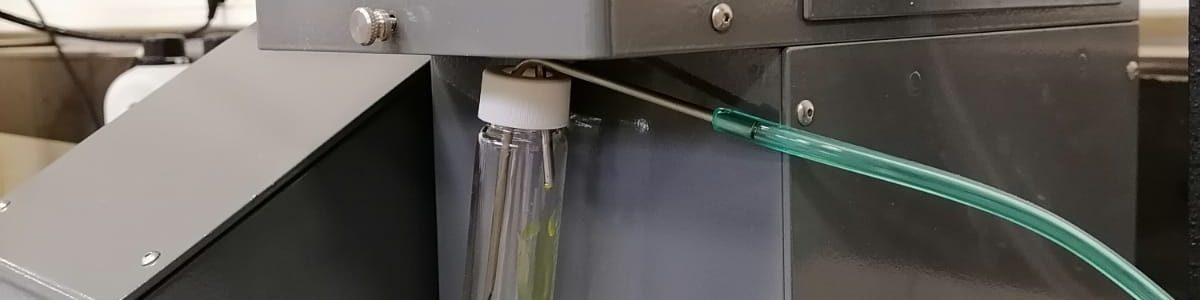
Laboratory studies have already investigated the extraction of chitin and chitosan from Acheta domesticus using chemical methods. The first analyses showed a low amount of ash and nitrogen content, indicative of the effectiveness of the chitin extraction method. The chitin extracted from Acheta domesticus is therefore suitable for chitosan production. The characteristics of the chitin and chitosan from Acheta domesticus are similar to those of commercial chitin extracted from shrimps, currently considered to be the best available quality on the market. Results from infrared spectroscopy, x-ray diffraction, scanning electron microscopy and elemental analysis showed that Acheta domesticus is a suitable alternative source of chitin and chitosan. These are even considered of better quality and purity than the commercially produced chitin and chitosan from shrimp. Therefore, they represent a promising alternative source of chitin and chitosan and could replace those extracted from commercial shrimp.
Currently, the extraction methods conducted in the laboratory involve the use of chemicals products. The production of chitin and chitosan by chemical process has different industrial drawbacks, such as high energy and water consumption, long handling times, greater solvent waste, high environmental pollution and production waste.
Currently, chitosan extraction from crickets’ shell has been studied only at the laboratory level. Scaling-up from laboratory procedure is a decisive and integral part of our project.
After the process has been proved and optimized in the laboratory scale, the up-scaling will be developed for medium-scale production. The biological method seems to be a promising approach for demineralization and deproteinization step. The use of this method is still limited to laboratory scale because demineralization and deproteinization have not yet reached the desired yields if compared to the chemical method. The physicochemical conditions that influence the fermentation seem to be the key factors of this bioprocess.
In order to evaluate the feasibility of chitosan production from Acheta domesticus, future research needs to focus on 1) studying and implementing alternatives to the chemical extraction methods and adopt a newly green ecological process (i.e. bioextraction); 2) provide data the original composition of the lipids in the insect. The presence of other minor compounds in the lipid extraction greatly depends on the extraction process. Insects fat has a high content of omega-3 and could therefore be used as an ingredient for bakery products, ice cream and dressings.on extraction yield and chitosan quality, using green extraction methods; provide concrete design of industrial medium-scale process units. A process developed in a laboratory must be translated into a full manufacturing scale process.