
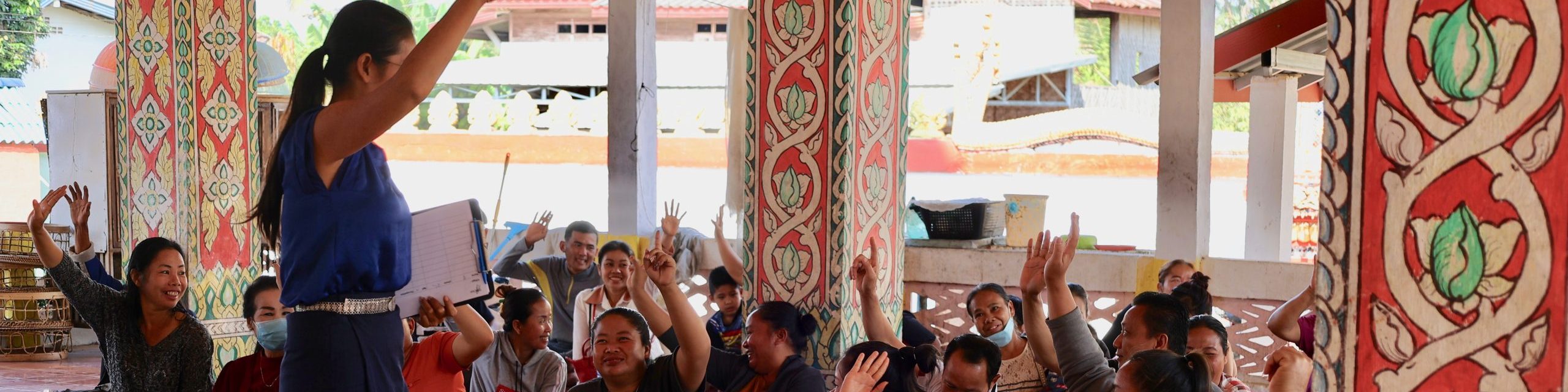
- The villages
Vientiane Province should not be confused with Vientiane Municipality, which is the capital of Laos. These two jurisdictions used to be together until 1989 when they split.
Located in the northwest of Laos, Vientiane Province borders Sayabouli Province to the east, Luang Prabang Province to the north, Xiangkhouang Province to the northeast, Bolikhamxay Province to the east, and Vientiane Municipality. Phonehong city, about 70 kilometers north of Vientiane Capital, is the province capital.
The district has a fertile soil suitable for plant cultivation and livestock farming with irrigation system for 45% of rice fields. The district is a semi-urban to rural area and there is a strong disparity between villages and families in the district. Malnutrition is still a rampant threat to vulnerable household who do not have land or labor force. Toulakhom district is a flooding-prone area, with the most recent one in 2020, destroying more than 2,800 hectares of agricultural land and severely impacting the populations of 26 villages.
Populations that are facing these threats cannot secure their livelihoods, are unable to cover their basic needs with a consequent negative impact on the household quality of life and with women being the first victims of this vicious cycle. Furthermore, poor villagers turn to illegal activities such as poaching, which is partly responsible for biodiversity degradation, extinction of wildlife species and the emergence of new diseases (i.e. COVID-19).
- The women
The project will promote women empowerment. The activities will be designed to benefit women and gender balance will be integrated across the project.
Women are facing difficulties to access health or agriculture services. Furthermore, male-dominated channels of information, mobility constraints, location of services, and a rigid and hierarchical gender distribution of tasks are key factors preventing women from participating in project activities and in family decision-making. By identifying key barriers, we can strategically target, minimize and address them in the project. To ensure that rural women benefit equally from the intervention, we will ensure participatory approaches when assessing farmers’ needs, and when women are specifically invited. We will organize meetings, training, and other activities in locations that are accessible to women, as close as possible to their homes and provide support to help women build their self-confidence. Improving women’s power is one of the necessary steps to address inequalities and to achieve long-lasting well-being in rural communities. A gender analysis will be conducted to determine equal participation of women and their families in the project. In Laos, matrilineal inheritance traditions are still followed but the social structure may offer men a more visible position. However, women’s socio-economic power within the family plays a major role in the household decision-making. By turning women into business managers, we give them a chance to acquire the role of family decision-makers.