End-of-studies internship carried out by Chloé DELBOVE
Master’s degree: Scientific Ecology and Social Sciences (Specialising in
socio-ecological transformations and transitions) National Museum of Natural History, Paris.
February-September 2025
Supervisors: Maya LECLERCQ (IRD), Catherine SABINOT (IRD)
Academic tutors: Nelly PARÈS, Sociologist, Senior Lecturer and Co-Director of the Master’s 2 programme, Anne-Caroline PREVOT, Ecologist, Centre for Ecology and Conservation Sciences (CESCO), National Museum of Natural History.
Fieldwork: Tahiti, French Polynesia
Defence on 8 October 2025 at the National Museum of Natural History in Paris.
Abstract
What if the key to climate resilience in French Polynesia lay not only in technical reports, but in the hands of those who work the land? At a time when the island territories of the South Pacific are facing unprecedented vulnerability (droughts, floods, food dependency), faaapu, Polynesian vegetable gardens, are emerging as veritable laboratories of innovation and survival.
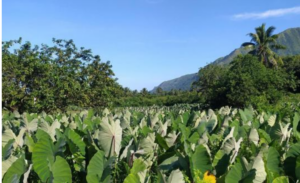
Faaapu of Tahiti, @crédits photos Chloé DELBOVE
This research, therefore, explores the role of faaapu as levers of resilience for the territory. Going beyond their simple productive function, the study analyses these spaces as places for the transmission and reinvention of local knowledge, whether traditional, experiential, or institutional. The central issue questions the extent to which these agricultural practices, rooted in everyday life on the Tahiti peninsula, are adapting to environmental changes. This study suggests that the combination of learning methods and the active mobilisation of this knowledge in the face of climatic constraints can produce systemic effects, thereby contributing to improved food security and overall resilience across the territory.
Context of the study
The aim of the study is to produce data on the future climate of the South Pacific (projections up to 2100). Chloé DELBOVE’s internship contributed to the production and analysis of data on local knowledge in French Polynesia.
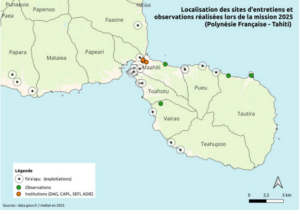
Figure 1: Map showing the location of interview and observation sites during the 2025 mission in French Polynesia, Tahiti. (Chloé Delbove, 2025, QGIS)
Three hypotheses guided the analysis:
- Agricultural knowledge and practices are the result of dynamic processes of learning and transmission.
- They are actively mobilised to cope with the effects of climate change.
- They can contribute to broader territorial resilience, under certain conditions.
This study emphasises the living, fluid nature of local knowledge and its potential for the socio-ecological and climate resilience of the territory.
It is based on a qualitative ethnographic survey conducted over two months (April-May 2025) on the Tahiti peninsula. It includes around thirty semi-structured interviews with farmers and institutional actors (ADIE, CAPL, DAG). The sample reflects a wide variety of profiles (age, background, gender, farm size, and type of crops).
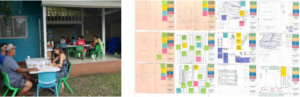
Figure 3: Feedback workshop, June 25 in Taravao, example of production “Draw your faaapu” (Maya Leclercq, 2025)
Key findings
In French Polynesia, faapu are much more than just vegetable gardens. They are multifunctional and contribute to the balance of Tahitian society. They provide food for personal consumption and generate income through sale or exchange. They preserve cultural roots through their connection to the fenua.
As in most South Pacific societies, knowledge is transmitted orally; one must watch and ‘learn by doing’, as one interviewee reported. Learning takes place within the family circle, particularly from grandparents to grandchildren. It is based on direct experience with physical engagement and experimentation in the field (watching, trying, making mistakes, and starting again).
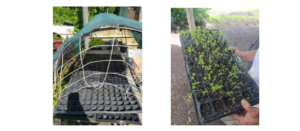
Figure 7: (From left to right) Protection of seedlings placed in elevated areas and covered with a tarpaulin, testing a new seed variety obtained from another farmer (Chloé Delbove, 2025)
In addition to this heritage, there are other sources of knowledge, such as training courses, exchanges between farmers, social networks, online videos, and personal trials.
However, this transmission is also subject to uncertainty. Farmers are ageing, and young people sometimes have aspirations other than working the land, making the succession of knowledge and traditions uncertain. Faapu have become laboratories for adaptation, where different practices are tested, ranging from crop diversification, adjustment of agricultural calendars, and refined water management to the development of composting and agroecological practices.
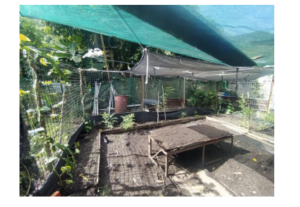
Figure 4: Photograph of a 20m2 fa’a’apu, with the raised seed table (Chloé Delbove, 2025)
Conclusion
This study shows that there are several levers of resilience and even resistance to climate change. Rooted in the present, faaapu are living, innovative spaces. It is imperative to recognise and support this local knowledge, in addition to scientific and institutional approaches. This is essential for building fairer adaptation strategies that are rooted in the identity and realities of Polynesians. It allows us to listen to the resilience they demonstrate and to value and capitalise on the full potential of promising local knowledge.
Read her thesis and presentation.