The project leaders:
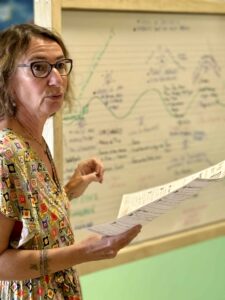
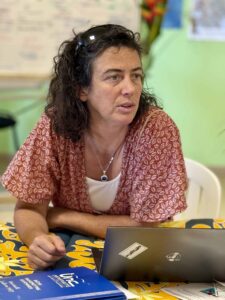
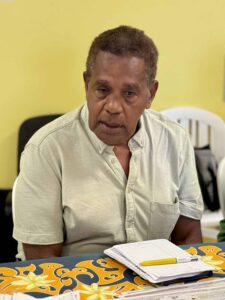
Crédits photos@ Aurelia
Stéphanie RABAULT (UNC) Project Manager for Equality, Diversity, and Inclusion
Catherine SABINOT (IRD) Researcher in Anthropology and Ethnoecology
Edouard HNAWIA (UNC-IRD) Chemist, Ethnobotanist, and Ethnopharmacologist
Qaja me kuca (saying and doing in the DREHU language)
From 12 to 15 November, researchers from the CLIPSSA project actively participated in the scientific and artistic residency of the TOPOS project coordinated by UNC and IRD, involving numerous local partners.
TOPOS?
Led by a multidisciplinary team, TOPOS is a two-year project that builds bridges between science, the arts, public policy and residents. Scientists, cultural actors and artists work together to answer a cross-cutting question: How can we reconnect with nature in the city when ecosystems are becoming fragile, languages are being lost and social cohesion is crumbling?
What will TOPOS participants produce?
TOPOS is a space and time for the co-production of ideas and means to make the biological and cultural synergies of the city of Nouméa visible and accessible. Its aim is to transform an urban area into a space for learning, creativity and resilience by inspiring both scientific productions and artistic creations. It aims to offer public authorities food for thought on urban planning and social cohesion in a context of societal change and climate constraints.
One of TOPOS’s tangible goals is the co-creation of a 12-kilometre scenic walking trail connecting the Maison de la Biodiversité in Nouméa to the Maison de l’Environnement in Mont-Dore, which will be supported and promoted by a variety of artists at the end of 2026.
More broadly, the TOPOS project aims to:
- Strengthen the link between residents and the environment;
- Promote local knowledge, languages and cultures;
- Encourage sustainable and more environmentally friendly management of public spaces;
- Overcome social and cultural divides through collective creation;
- Democratise and popularise the results of scientific research.
In a context of ecological crisis and social tensions, TOPOS proposes to restore the relationship between humans and nature at the heart of the city through science and art, mobilising flourishing linguistic diversity. This project embodies a profoundly Oceanian vision: a holistic perception of the environment. In this way of seeing and inhabiting the world, everything is connected: every human, animal, plant or mineral entity contributes to the balance of a visible and invisible ecosystem. In other words, it is a whole.
And what does CLIPSSA have to do with all this?
Catherine Sabinot, coordinator of CLIPSSA, initiated and co-leads the TOPOS project with Stéphanie Geneix-Rabault (UNC) and Edouard Hnawia (IRD-UNC). As for the diverse CLIPSSA team, it is taking research on board the canoe of artistic creation. It will bring ideas and research results in the humanities, social sciences and climate science to TOPOS. The team will support the deployment of ethnographic surveys, evaluate the scope of the project and also play its part in the canoe of artistic creation!
During the November residency, four members of CLIPSSA worked with the residency participants to devise the key stages of the itinerant journey, highlight the key research findings that could be showcased in the artistic creations, and plan the next steps for 2026: a presentation of the residency in March and a new creative residency in September