C Nature Conference: Observe, innovate and share

Farmers in the Pacific confronting climate change

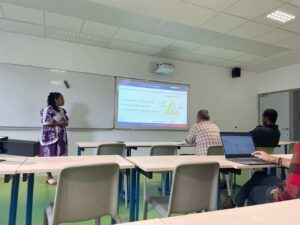
On 2 December 2025 at 6 p.m., the South Province auditorium hosted a C’Nature conference dedicated to agriculture and adaptation to climate change. On this occasion, researchers from the CLIPSSA project shared their various works:  Catherine Sabinot (anthropologist and ethnoecologist), Maya Leclercq (anthropologist and sociologist, via videoconference from French Polynesia), and Samson Jean-Marie (PhD student in anthropology and geography), as well as Ida Palene, a former intern who is now a civic service volunteer with CLIPSSA. Together, they discussed a key question:

How, particularly in South Pacific societies, do farmers observe climate change in their immediate environment? Do they experiment with concrete responses, and do they pass on knowledge and practices to better adapt to it?

In the Pacific islands, agriculture is practised in close harmony with the seasons, the soil, the winds, the rain… and extreme events. Knowing how to anticipate a very dry period, reorganise crops after heavy rains, or prepare for the approach of a cyclone is part of daily life for many families. At the heart of the discussions is a powerful idea: the communities of New Caledonia, Vanuatu, Wallis and Futuna, and French Polynesia have built, through experience, genuine ‘cultures of risk’. In other words, ways of observing, interpreting and acting that enable them to cope with climate uncertainty. The challenge today is to combine this knowledge and these practices with scientific knowledge in order to strengthen adaptation.


Recognising and identifying vulnerabilities in the face of a real climate threat

During the conference, researchers highlighted the transformations of weather and climate mechanisms driven by climate change, particularly the ENSO mechanism, which causes year-to-year fluctuations in rainfall and temperature. They explained how these changes affect agricultural crops, harvests, and water storage.

Dry seasons tend to be longer and more intense. They hinder crop growth, cause water stress, dry up water sources, and make the soil harder to cultivate. Conversely, severe flooding leads to plant diseases and destroys crops. In both cases, communities must adopt new water management strategies and prepare for shifts in agricultural yields. The climate emergency therefore raises pressing concerns about food security.


“The hardest part is water. The dry season lasts longer; the small creek there (…) just stones, stones (…) we have to choose which field to save.” Farmer from Canala, New Caledonia, January 2024


Hybridising knowledge: a tool and space for resilience

During the presentation and subsequent discussions, the CLIPSSA team described knowledge hybridisation as an active, living process. It can be defined as the combination of endogenous knowledge (inherited from ancestors, embedded in genealogy, and passed down through generations) and exogenous knowledge (from external sources such as NGOs, scientific research, social media, etc.). Over time and through climate events, farmers experiment with new practices and generate new forms of knowledge, shaped by their own experience and the various resources available to them.

Researchers described several practices and techniques observed in New Caledonia, Vanuatu, French Polynesia and Wallis and Futuna: mulching, angled staking, crop diversification, selecting more resilient seed varieties, and innovations in irrigation. They also showed how learning spaces and moments are diversifying, involving nakamals, kava bars, schools, markets, fields, and small Oceanian home gardens such as fa’a’pu, as well as social media and various forms of media. These spaces and moments—these evolving socio-temporal settings—move beyond conventional pathways and societal norms, enabling adjustments in agricultural practices within climate contexts that are themselves constantly changing.

Part of the conference was dedicated to the role of women in the circulation of knowledge, highlighting the essential yet often invisible role they play.
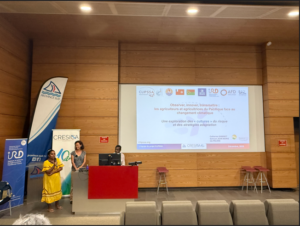
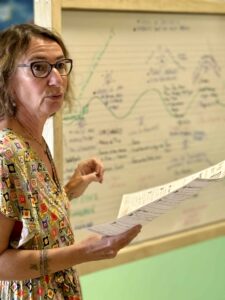
Ida Palene, agricultural engineer, presenting her research on the role of women in the circulation of knowledge.
Photo credits: Marie Baritaud.

How did the researchers work with local communities?

Through semi-structured interviews and participant observation, researchers worked alongside farmers to make visible the lived experiences of local communities facing climate change and to highlight the ways in which knowledge circulates.

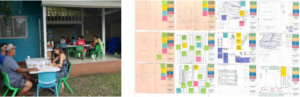
They organised participatory mapping workshops, during which participants spatialised cultivated areas exposed to various climate hazards. They also collaborated with schools, notably through drawing workshops that revealed the representations and knowledge of the younger generation.
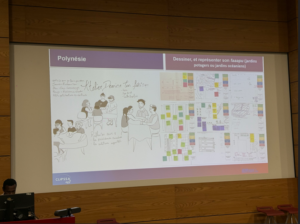
@crédits photos Marie Baritaud 

The C Nature 2025 conference once again demonstrated the importance of combining local knowledge with academic research. Farmers experience the direct impacts of climate disruption and, on a daily basis, develop ways of forecasting weather conditions and adapting to them. Through trial and error, as well as success, they build a genuine culture of risk. By merging endogenous local knowledge with exogenous knowledge, adaptive strategies emerge that resonate more closely with those who work the land — and which deserve to be more fully integrated into public policy.
French Polynesia Symposium: Food and Culinary Tourism in Oceania


When food sovereignty becomes a lever for sustainable development

The international and multidisciplinary symposium dedicated to food and tourism in Oceania, jointly organised by the Pacific Campus for Hospitality and Catering Professions and Qualifications (CMQP), the Centre for Tourism Studies in Oceania-Pacific (CETOP), the Centre for Island Health Studies (CESMI) and the Centre for Island Governance and Development (GDI), in partnership with the University of French Polynesia (UPF), was held in Tahiti from 25 to 27 November 2025. This event was devoted to the issues of food sovereignty, tourism and catering.

Oceania has an exceptional wealth of food that is beneficial to health, but it also depends on imports of food products, some of which are processed, leading to diseases such as diabetes and obesity.

This symposium is part of a scientific, heritage and tourism initiative. As the promotion of local knowledge is one of the pillars of the CLIPSSA project’s action research, two members of our team, Fleur VALLET and Maya LECLERCQ, participated in this symposium in Papeete.


The Clim’en vers and Clim’à table projects, or the science of mediation

After presenting the main components of the project, the partners and the territories involved in CLIPSSA, Fleur introduced the audience to the Clim’en vers and Clim’à table projects. The focus was on the Clim’à table project, in line with the theme of the 2025 conference.

These initiatives have demonstrated the existence of different vectors for raising awareness of scientific mediation, which open up further options for popularisation (slam, gastronomy).

They show that popularisation is not just a matter of simplifying content, but above all of reinventing language. Slam, gastronomy, food, tourism and other cultural forms are powerful cognitive and emotional vectors. They mobilise attention, identification and engagement, three essential conditions for the circulation of knowledge.

This also demonstrates that understanding a concept and using specific or proposed intermediate means is a way of responding to and resisting the increasingly pressing climate challenges, as the example of faaapu shows us. The Clim’a table project and faaapu lay the foundations for a question: How can tomorrow’s food be a factor in resilience, development, innovation and adaptation in the face of climate change?


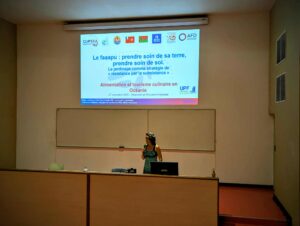
Faaapu: Resistance through subsistence.

Maya presenting her research results on faaapu @ Fleur Vallet

Vegetable gardens are called ‘faaapu’ in Tahiti and Moorea, and refer to a form of domestic agriculture. Faaapu generally occupy small plots of land, often close to homes, and their primary function is to reduce food expenses, promote healthy eating and increase self-sufficiency. This method of gardening generally does not use pesticides, and there are different ways in which knowledge is passed on between residents who cultivate their faapu. They are also laboratories for experimentation and hybridisation between knowledge and their environment, as most Oceanic people feel and experience it. Cultivating and feeding oneself, despite climatic and economic uncertainties, is a way of resisting, of sustaining oneself over time and therefore of existing.

Beyond the social, spiritual and economic dimensions of agriculture and fishing, food security is one of the foundations on which Oceanian culture is based. People farm and fish primarily to eat. Faaapu are therefore a pillar of local autonomy. They promote healthy eating, the transmission of traditional knowledge and experimentation with practices adapted to the current environment. In the face of climate change, these spaces are becoming places of innovation where ancestral knowledge is evolving. Food security thus appears to be a central factor in cultural continuity and mediation between traditions, adaptation and transmission.  They are being reinterpreted and enriched in the face of a new parameter: the climate challenge. Because for Oceanic peoples, to live is to resist.


Find our team’s presentations here

Future Adaptation: Combining science, territories and knowledge to adapt to the climate of the South Pacific


An international framework for thinking about adaptation

From 13 to 16 October 2025, the CLIPSSA team attended to the Adaptation Future 2025 international conference in Christchurch, New Zealand. Part of the United Nations World Adaptation Science Programme (WASP), this major event brought together researchers, public decision-makers, economic actors, associations and local communities. It provided a unique forum for discussion on adaptation strategies to the effects of climate change, with an emphasis on recognising and using indigenous and local knowledge as levers for resilience. This echoes the areas ofreflection and research-action, the core of CLIPSSA project.


CLIPSSA: a collective and interdisciplinary dynamic

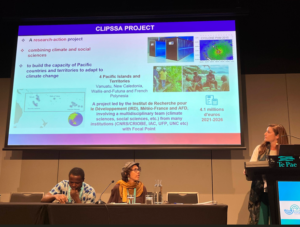
During a panel discussion entitled ‘Connecting knowledge: transdisciplinary approaches to climate change adaptation in the South Pacific’. CLIPSSA researchers demonstrated the relevance of combining exact sciences and local knowledge. These disciplines work together to transform raw data into concrete tools for public decision-making, adapted to the realities of the concerned areas(Vanuatu, New Caledonia, Wallis and Futuna, and French Polynesia).

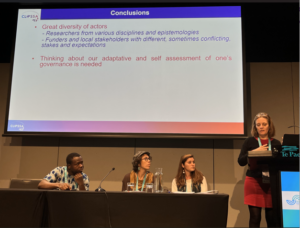
CLIPSSA operates in a dense institutional landscape, and the project must harmonise the interests of multiple stakeholders (researchers, funders, technicians) at local and regional levels. The cooperation and success of the project, therefore, relies on fluid and clear collaboration between partners with different epistemologies.

@crédits photos Christophe BUFFET AFD

‘At the local level, we work with a wide range of stakeholders, each with different timeframes and interests, whether accessing data and results or contributing to public policy direction.’ Fleur VALLET, project engineer and geographer’  Fleur VALLET, CLIPSSA project engineer


The humanities and social sciences team: pillars of resilience

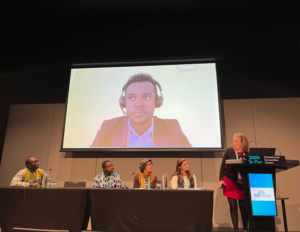
The humanities and social sciences research team (Maya LECLERCQ, postdoctoral researcher in anthropology, and Samson JEAN MARIE, doctoral student in anthropology and geography) demonstrate through surveys and observations that adaptation is the result of practical field intelligence developed by farmers in New Caledonia, Vanuatu and French Polynesia. It stems from a detailed understanding and observation of natural cycles. And although the threats are common (cyclones, floods), the responses are specific to each territory; adaptation is not uniform: it is rooted in local culture and geography and evolves according to context, gender and resources, whether material (agricultural equipment) or immaterial (transmission of endogenous or exogenous knowledge).  This illustrates a philosophy of adaptation based on humility and cohesion:

Vanuatu: ‘When the cyclone hits, we don’t decide alone. We get together and see what is still possible.’

New Caledonia: ‘We cannot fight against the water, so we adapt to it.’

Samson, via video call from New Caledonia @photos crédits Christophe BUFFET AFD

From climate modelling to agricultural resilience

Accurate climate data is essential for forecasting agricultural yields and securing water resources in the South Pacific. Global climate models produced by the IPCC (Intergovernmental Panel on Climate Change, created in 1988 by the United Nations Environment Programme and the World Meteorological Organisation, which brings together 195 member states) are often too imprecise for the small islands of the South Pacific.

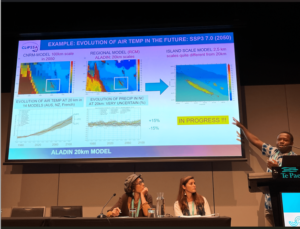
CLIPSSA refines this data using the ALADIN (20 km) and AROME (2.5 km) models to match the specific topography of the South Pacific islands. This is the downscaling methodology: integrating the specific characteristics of each island provides hyper-local accuracy, as these characteristics influence climate data. However, while there are certainties and grey areas if the rise in temperatures is confirmed, uncertainty remains about precipitation, requiring increased monitoring of extreme events, as presented by Dakéga RAGATOA, our researcher in modelling the impacts of climate change on agricultural systems.

@crédits photos Christophe BUFFET

Gildas GUIDIGAN (researcher and modeller) will link this data using the APSIMx model. This is an agricultural production system simulator developed to reproduce and analyse in detail the interactions between crops, climate, soil and agricultural management practices. This agronomic model will translate climate data into real impacts on food crops (yams, taro). This will make it possible to map the areas that could remain cultivable and those that might become vulnerable, thus providing concrete tools, adapted to the terrain, to support agricultural adaptation and sustainable water management strategies.


Adaptation by and for the territories of the South Pacific

For Séverine Bouard, geographer and panel moderator, adaptation cannot be one-size-fits-all; it reflects those who practise it. Each island has its own social and political organisation. And after five years of work, two observations have emerged: rich interdisciplinary collaboration has generated a huge amount of knowledge, but there are also gaps and challenges that show that data is still missing that is necessary for reliable and accurate modelling of food crops.

Séverine BOUARD, panel moderator @photo credits Christophe BUFFET


Tahiti’s faaapu (Oceanian gardens): A lever for resilience in the face of climate change- Final year project by Chloé DELBOVE

End-of-studies internship carried out by Chloé DELBOVE
Master’s degree: Scientific Ecology and Social Sciences (Specialising in
socio-ecological transformations and transitions) National Museum of Natural History, Paris.
February-September 2025
Supervisors: Maya LECLERCQ (IRD), Catherine SABINOT (IRD)
Academic tutors: Nelly PARÈS, Sociologist, Senior Lecturer and Co-Director of the Master’s 2 programme, Anne-Caroline PREVOT, Ecologist, Centre for Ecology and Conservation Sciences (CESCO), National Museum of Natural History.
Fieldwork: Tahiti, French Polynesia
Defence on 8 October 2025 at the National Museum of Natural History in Paris.


Abstract

What if the key to climate resilience in French Polynesia lay not only in technical reports, but in the hands of those who work the land? At a time when the island territories of the South Pacific are facing unprecedented vulnerability (droughts, floods, food dependency), faaapu, Polynesian vegetable gardens, are emerging as veritable laboratories of innovation and survival.


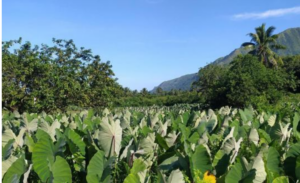
Faaapu of Tahiti, @crédits photos Chloé DELBOVE

This research, therefore, explores the role of faaapu as levers of resilience for the territory. Going beyond their simple productive function, the study analyses these spaces as places for the transmission and reinvention of local knowledge, whether traditional, experiential, or institutional. The central issue questions the extent to which these agricultural practices, rooted in everyday life on the Tahiti peninsula, are adapting to environmental changes. This study suggests that the combination of learning methods and the active mobilisation of this knowledge in the face of climatic constraints can produce systemic effects, thereby contributing to improved food security and overall resilience across the territory.


Context of the study

The aim of the study is to produce data on the future climate of the South Pacific (projections up to 2100). Chloé DELBOVE’s internship contributed to the production and analysis of data on local knowledge in French Polynesia.

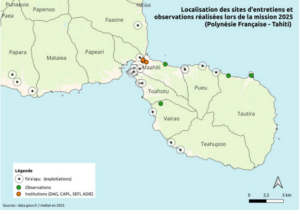
Figure 1: Map showing the location of interview and observation sites during the 2025 mission in French Polynesia, Tahiti. (Chloé Delbove, 2025, QGIS)

Three hypotheses guided the analysis:

  • Agricultural knowledge and practices are the result of dynamic processes of learning and transmission.
  • They are actively mobilised to cope with the effects of climate change.
  • They can contribute to broader territorial resilience, under certain conditions.

This study emphasises the living, fluid nature of local knowledge and its potential for the socio-ecological and climate resilience of the territory.

It is based on a qualitative ethnographic survey conducted over two months (April-May 2025) on the Tahiti peninsula. It includes around thirty semi-structured interviews with farmers and institutional actors (ADIE, CAPL, DAG). The sample reflects a wide variety of profiles (age, background, gender, farm size, and type of crops).

Figure 3: Feedback workshop, June 25 in Taravao, example of production “Draw your faaapu” (Maya Leclercq, 2025)

Key  findings

In French Polynesia, faapu are much more than just vegetable gardens. They are multifunctional and contribute to the balance of Tahitian society. They provide food for personal consumption and generate income through sale or exchange. They preserve cultural roots through their connection to the fenua.

As in most South Pacific societies, knowledge is transmitted orally; one must watch and ‘learn by doing’, as one interviewee reported. Learning takes place within the family circle, particularly from grandparents to grandchildren. It is based on direct experience with physical engagement and experimentation in the field (watching, trying, making mistakes, and starting again).


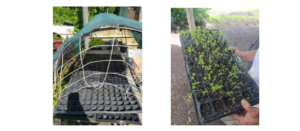
Figure 7: (From left to right) Protection of seedlings placed in elevated areas and covered with a tarpaulin, testing a new seed variety obtained from another farmer (Chloé Delbove, 2025)

In addition to this heritage, there are other sources of knowledge, such as training courses, exchanges between farmers, social networks, online videos, and personal trials.

However, this transmission is also subject to uncertainty. Farmers are ageing, and young people sometimes have aspirations other than working the land, making the succession of knowledge and traditions uncertain. Faapu have become laboratories for adaptation, where different practices are tested, ranging from crop diversification, adjustment of agricultural calendars, and refined water management to the development of composting and agroecological practices.

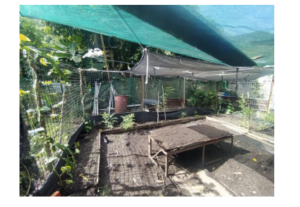
Figure 4: Photograph of a 20m2 fa’a’apu, with the raised seed table (Chloé Delbove, 2025)

Conclusion

This study shows that there are several levers of resilience and even resistance to climate change. Rooted in the present, faaapu are living, innovative spaces. It is imperative to recognise and support this local knowledge, in addition to scientific and institutional approaches. This is essential for building fairer adaptation strategies that are rooted in the identity and realities of Polynesians. It allows us to listen to the resilience they demonstrate and to value and capitalise on the full potential of promising local knowledge.


Read her thesis and presentation.

Vanuatu: Women who are (re)adjusting agricultural practices in the face of climate change – Final year project by Ida PALENE

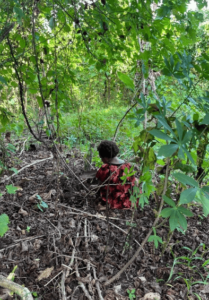
Woman in her field, @credits photos Ida PALENE

End-of-studies internship carried out by Ida PALENE
ISTOM: School of Engineering in International Agricultural Development
February–August 2025
Supervisors: Samson JEAN MARIE (IRD), Catherine SABINOT (IRD)
Fieldwork: Vanuatu
Defence on 23 October 2025 in Angers in the presence of two professors who are members of the jury: Brice EBODE, lecturer and researcher in geosciences and the environment, and Smail Slimani, lecturer and researcher in hydrogeology at ISTOM.
Ida during her thesis defense in Angers, @crédits photos Ida PALENE

In two rural villages in the Vanuatu archipelago, women farmers are reinventing agricultural practices, solidarity and gender roles on a daily basis to cope with climate and social upheaval. Ida Palene, a young agro-development engineer, went to share their daily lives.

Continue reading