Understanding scientific research in 3 minutes


Understanding and exploring scientific issues in a clear, concise, readable and alternative way makes scientific research accessible to all types of audiences.


The following information sheets have been created to meet this need with the support and scientific data provided by CLIPSSA researchers:


Fact sheet 1: “What is CLIPSSA?’”

Fact sheet 2: ” Building CLIPSSA”

Fact sheet 3: Better measuring for effective action”

Fact sheet 4: Changes in farming practices in New Caledonia”

Fact sheet 5:Coping with water scarcity”

Fact sheet 6: Coping with water shortages”


Other fact sheets will be available soon.


Based on the research and work of scientists involved in the CLIPSSA project, these fact sheets address various issues related to the effects of climate change, such as water management, adaptation of agricultural methods and climate modelling.


They explain complex scientific work in a simplified manner, while helping to inform decisions and encourage action by stimulating reflection on the challenges of the future.


These fact sheets were produced in collaboration with the communications agency ‘Bien fait pour ta Com’, the IRD’s graphics department in Marseille, the CLIPSSA communications team, to combine scientific rigour, clarity of expression and visual quality.


CLIPSSA at the Caledonian Climate Change Forum!

Credit: Government  of New Caledonia


CLIPSSA at the second edition of the Caledonian Climate Change Forum


At the second edition of the Caledonian Climate Change Forum on Tuesday, 22 July at the University of New Caledonia (UNC), IRD, Météo-France, and the French Development Agency (AFD) were present to welcome various institutional, economic and academic stakeholders.

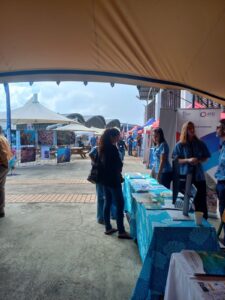
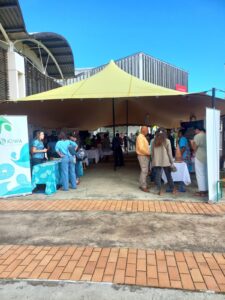
CLIPSSA was present at the exhibition village (Météo-France and AFD), which allowed the public to discover the advances and results. Information sheets were displayed at the exhibitions.


Credit: Eléa Yung-Hing, IRD

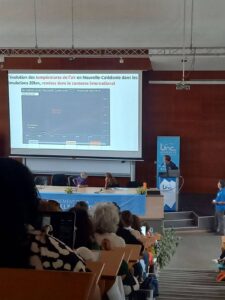
During the morning plenary session, the scientific coordinators (Christophe Menkès from IRD and Alexandre Peltier from Météo-France) shared an overview of the current state of climate science research.


Credit: Eléa Yung-Hing, IRD


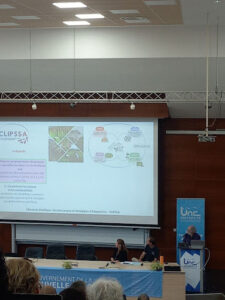
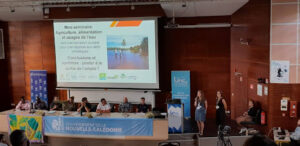
Then, in the afternoon, the CLIPSSA team organised and participated in a mini-seminar entitled ‘Agriculture, food and water use: towards a sustainable transition to respond to climate challenges’, where Fleur VALLET (geographer and project manager) and Maya LECLERCQ (socio-anthropologist, postdoctoral researcher) led and moderated discussions with the following speakers: Thomas ABINUN (Météo-France Interregional Directorate in New Caledonia and Wallis and Futuna), Sebastien BLANC (Technopole), Franck SOURY-LAVERGNE (CAP-NC), Stephane BALAYRE (DAVAR), Julie DEFFIEUX (REPAIR), Yannick FULCHIRON (Agence Rurale), Samson JEAN-MARIE (IRD), Gildas GUIDIGAN (IRD).


The presentation was divided into four main themes :


  • The first focused on the effects and impacts of climate change on agriculture and water resources. Météo-France, Technopole and CAP presented the main changes in rainfall patterns in New Caledonia, as well as their concrete consequences on agricultural yields.
  • The second addressed the issue of competing interests, how to reconcile the needs of agriculture, food, and other water uses in the context of competition and collective water management. DAVAR discussed the overall importance of water resources, with significant spatial and temporal variability, drinking water supply services, needs/resource assessments and local water governance.

Next, an update was provided on adaptations, analysing existing solutions and practices or those to be implemented. CAP NC and REPAIR discussed land use planning and agricultural policies, support for farmers, and changes in practices, using CLIMATERRA and REALISM as examples.


Focus on CLIPSSA :


  • The CLIPSSA team took an anthropological approach to the subject.


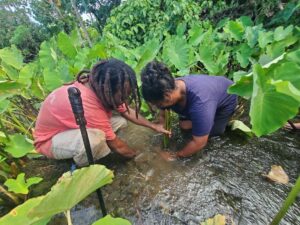
During his presentation, Samson Jean-Marie outlined the adaptation strategies implemented by local communities during prolonged droughts, using the example of a farmer who abandoned his plantations, which his descendants were able to rehabilitate thanks to innovative solutions. He explained these different solutions, including deferred and localised weeding, mulching on crop rows or localised mulching, the coupling of irrigation systems, and the relocation and establishment of plots, with strategies to limit the impact of cyclones and erosion.

Gildas Guidigan went on to explain that plants respond to specific climate changes such as high temperatures, droughts, irregular rainfall, more frequent extreme events and increased risks to agricultural productivity through physiological, agronomic and sometimes adaptive mechanisms. Indeed, climate stress causes a decrease in photosynthesis in high heat, stomatal closure and loss of growth, reduced fertility (floral sterility, non-viable pollen), and an acceleration of the cycle (less time to produce grain). For example, tubers and cereals in the Pacific, particularly in New Caledonia, have their water requirements and increased vulnerability to heat.

To explain his research, Gildas presented the simulation tool APSIM next gen, which aims to reproduce crop growth (maize, rice, etc.), test different future climate scenarios (RCP 4.5, 8.5, etc.), evaluate alternative agricultural practices (sowing, irrigation, varieties), and assess the response of crops (rice and corn) to climate variables. Results have been observed, particularly with maize, where increasing water stress during flowering and a possible decrease in yield have been noted if the sowing date is inappropriate. For yams, high temperatures cause floral sterility, making irrigation essential in future conditions. The adaptation scenarios identified are therefore to bring forward sowing dates and choose more resistant varieties, as well as optimise water management. Plants experience climatic stress, and their responses can lead to productivity losses, demonstrating the importance of simulation models such as APSIM.


  • Then, in a fourth area, the rural agency, Repair and Technopole, developed a future of possibilities based on food and agricultural models for tomorrow and collective choices to be avoided to guarantee sustainable agriculture and food in the face of future climate change. The topics discussed included the transformation and autonomy of agri-food systems, food behaviour in New Caledonia, more autonomous and economical production systems, ecosystem services and agroecology, and acclimatised local varieties.


Find the summary sheet for the round table discussion here.


Credit: Catherine Sabinot, IRD


A youth brimming with ideas and motivation


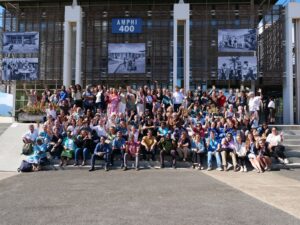
As the government wanted to involve young people in its action plan for adapting to climate change, they were given prominence at this forum, particularly through the choice of venue for the event. Science classes were cancelled so that students could attend the round tables. Educational activities were organised at specific stands to communicate and popularise scientific research among students. Finally, the media present interviewed the young people in attendance.


  • A youth advocacy event was organised to give young people a voice.
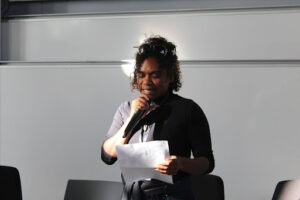
  • Two slam sessions were held by Georgina Sioremu, a communications and mediation apprentice with the CLIPSSA team: the dark humour of climate change and my youth has its place.


Credit: Government of New Caledonia


This youth session echoes the study carried out in 2024 by Ilona DA CRUZ GERNGROSS, a Master’s 1 Sustainability Sciences intern in 2024 within the CLIPSSA project, ‘The integration of young people in the consultation and development processes of the climate change adaptation strategy in New Caledonia’. 


The CLIPSSA project highlights local adaptation strategies to climate change in the Pacific at the 92nd ACFAS conference

At the 92nd ACFAS conference, held May 5–9, 2025, in Canada on the theme of “cross-disciplinary research perspectives on responsible management practices,” the CLIPSSA project (Climate of the South Pacific, Local Knowledge, and Adaptation Strategies) gave a voice to Pacific island agriculture. In a presentation entitled “From perception to adaptation strategies: local climate change management practices in New Caledonia and Vanuatu,” Samson Jean Marie, a doctoral student in anthropology and geography working on this project, presented the initial results of these field surveys. He explained how farmers in these territories, who are on the front line of climate change, are adapting their practices to cope with it.


Territories on the front line

Oceanian societies, which are heavily dependent on natural and agricultural resources, are on the front line when it comes to intensifying weather, climate, and environmental disturbances: prolonged droughts, destructive cyclones, soil salinisation, and shifts in agricultural seasons. Vanuatu, regularly ranked among the countries most exposed to global climate risks, is a striking example of this. In New Caledonia, repeated episodes of La Niña and El Niño are causing water imbalances and undermining food security in rural areas.

Based on around 100 interviews conducted with farmers, institutions, politicians, and local organisations, Samson, in collaboration with the project’s research team, analyses how agricultural knowledge is built and transmitted in the face of climate change.

This resolutely interdisciplinary approach combines anthropology, agronomy, geography, sociology, and climatology to grasp the complexity of local dynamics. In his presentation, the doctoral student outlined a range of local adaptive responses, such as crop management practices, water management strategies, local cyclone warning systems, and post-disaster responses identified in the areas studied. “Adaptation is not simply a matter of applying international recommendations. It is experienced, improvised, and discussed at the level of gardens, fields, and families,” explained the young researcher.


Dynamic local knowledge

Contrary to popular belief, local knowledge is not static. It is transmitted, adjusted, and reinvented in response to climate change. Traditional mulching, hole cultivation, water storage in handmade tanks, adaptation of varieties, and community oral alerts before cyclones: farmers’ innovations take many forms, often invisible to decision-makers, but central to local resilience. “In several villages in Vanuatu and among tribes in New Caledonia, experienced farmers serve as information relays before cyclones arrive. They read the signs of the wind, the birds, and the sea.  These biocultural markers, combined with weather information, enable farmers to anticipate the event [cyclone] ” better, as observed more broadly by the research team.


From words to action: when local practices lead the way

By documenting this knowledge, the CLIPSSA project highlights that rural communities in the Pacific are not simply “vulnerable” to the effects of climate change: they are already taking action, often in pragmatic and innovative ways, far from the media spotlight or international climate policies. In other words, these initiatives already embody a responsible approach to climate and environmental change management at the local level. They provide a concrete foundation on which public policies and institutions can build.

The ACFAS conference thus provided a forum to highlight the urgent need to change approaches to local agricultural adaptation practices in climate policies. In response to the conference title, “Cross-disciplinary research perspectives on responsible management practices,” and the conference debate, “Moving from words to action,” the doctoral student replied: “It is time to move from words to action. And that starts with recognising that adaptation cannot be decreed, but must be built with those most directly affected: the inhabitants themselves. Local practices, particularly those related to adaptive responses to the impacts of climate change, are a form of local expertise in action. Ignoring them means depriving ourselves of essential levers for sustainable adaptation.”

Taro plantation in the ‘voura’ of Ipayato (Santo, Vanuatu) @ Samson JEAN MARIE

Resources for learning and transmitting local agricultural knowledge and know-how 20/11/2024

 End-of-study internship carried out by Marie-Amélie RICHEZ

ISTOM – School of international agro-development
April – August 2024
Supervisors: Catherine Sabinot (IRD), Maya Leclercq (IRD)


She defended her final thesis on October 17, 2024 in front of the ISTOM jury team, students from the same school as well as her supervisors. Marie-Amélie also participated in the animation of 2 restitutions to the stakeholders (farmers and institutional actors) of the CLIPSSA project in Tahiti.

Memory summary

In a context of climate change, the Pacific islands, which include French Polynesia, are facing sometimes extreme atmospheric phenomena impacting various sectors, including agriculture. The CLIPSSA project, into which this dissertation is integrated, focuses on the one hand on the production of new scientific data on the future climate of the South Pacific, and on the other hand on the analysis of sectoral impacts, in order to support strategies adaptation to climate change carried out by public authorities.

The thesis focuses on the resources mobilized by farmers on the Taravao plateau in order to learn and/or transmit their agricultural knowledge and know-how in a context of climate change. The results show that there is a diversity of material and intangible resources mobilized by farmers.

The mobilization of these resources results in various learnings which, in certain cases, allow farmers to find solutions adapted to their constraints, including the impacts of extreme weather phenomena affecting the Taravao plateau. This “local knowledge” is essential resources on which to support current and future climate change adaptation strategies.

Context of the study

French Polynesia, located in the heart of the Pacific Ocean, faces significant socio-economic and environmental challenges, particularly in the tertiary sector. Its economy is partly dependent on financial transfers from the French state, and the agricultural sector, although modest in terms of its contribution to GDP, plays a crucial role for the territory’s food security. The cultivated area is small, only 9% of the land surface is cultivated, or around 40,000 ha of usable agricultural area (UAA) (Dubreu et al., 2024).

In addition to the low proportion of cultivable land, the decline of the agricultural workforce, as well as land complexity, particularly linked to the joint ownership of land and access to land, pose obstacles to the expansion of agriculture. local agriculture. In addition to the aforementioned socio-economic constraints, there are environmental constraints, including the impacts of climate change which weigh on agriculture.
In Taravao, a commune in Tahiti, farmers produce a diversity of vegetables, tubers and flowers.

Although market gardening is the majority, the study presented also focuses on the production of vanilla and taro, a tropical tuber, respectively for the sensitivity of vanilla flowers and the resistance of taro to certain phenomena punctuating or governing the daily newspaper on the island. To ensure the productivity of their fields, farmers implement practices, adapt and readjust them over time, constraints encountered, etc. This adaptation is fueled by a process of learning and transmission of local knowledge and know-how in which we are interested.


Main results

The meetings and exchanges with 22 farmers organized over two and a half months in the field allowed the collection of information regarding the learning resources and transmission of local agricultural knowledge and know-how that they mobilize. There are intangible and material resources.

– Intangible resources are vectors of information and therefore of knowledge and know-how. It is through these resources that the circulation of one or more information takes place. This includes the human network (family, professional and friendly), Information and Communication Technologies (ICT) and other information media (magazines, thesis, etc.), specialized groups such as associations, etc. and diploma courses. Finally, empiricism, or practical experience, appears to be an essential resource for learning knowledge and know-how.

– Material resources are physical resources which allow the implementation of a change in practice as they make the application of a solution possible (e.g. the tractor and its accessories for mechanized tillage, system irrigation for water supply to crops, etc.). There are various inputs which depend on the activity carried out, such as agricultural equipment (e.g. greenhouses, tractors, irrigation systems, etc.), chemical and natural inputs, i.e. fertilizers, pesticides, herbicides. , etc. and finally the water resource.

The daily or occasional mobilization of these resources contributes to the implementation of new agricultural practices by the farmers met on the Taravao plateau. Among the practices put in place, several aim to partially overcome meteorological constraints. Indeed, the farmers we met say they have to deal with the impact of heavy rains, periods of low rainfall accompanied by intense heat felt or even the shift in seasons with a later arrival of the cool season.

What practices are put in place to overcome these constraints?


Example of greenhouses to minimize the impacts of heavy rain

Rain is among the atmospheric phenomena impacting crops most cited by farmers. These cause significant impacts, particularly on market gardening and vanilla crops due to their intensity or duration. In the market gardening sector, a prolonged rainy episode can sometimes partially or totally compromise harvests, depending on the sensitivity of the crops to excess water. The rains also represent a threat to the production of vanilla pods due to the fragility of their flowers. Under the influence of rain, the pollen melts and manual pollination of the flowers becomes impossible. Without pollination no vanilla pod will be produced. During the rains, as many pods are lost as unpollinated flowers. Finally, through the speeches of farmers, taro does not appear as a production particularly sensitive to rain in comparison with market garden vegetables and vanilla; although the sensitivity of taros to humidity differs depending on the variety.

The farmers and vanilla growers met in Taravao are implementing various adaptation solutions, including the installation of greenhouses. Greenhouses help protect crops from the direct impact of rain by providing a waterproof cover. By freeing themselves from the rain constraint, it is possible for market gardeners to extend the production period of certain crops, notably tomatoes, the cultivation of which is extended over the hot season, a rainy season (southern summer of November to April).

This then ensures financial income over this period: “Taravao is renowned for being a very rainfed area. It’s raining a lot, a lot. As a result, in the rainy season, we cannot grow vegetables because it rains too much. All those who are in open fields like that, when they have rain, they have more vegetables. So, we installed greenhouses to be able to fill this gap. And here we are, in the rainy season, we can still produce.” (Market gardener, 30-35 years old). Please note, however, that installing a greenhouse represents an investment that not everyone is able to cover. The financial capital available to the farmer in question can therefore act as a limiting condition for the implementation of such a solution.


Conclusion

In addition to the example presented above, the study carried out in Taravo made it possible to highlight resources that are a priori commonly mobilized such as the family or, for a minority of farmers, specialized groups. These resources sometimes allow the modification of agricultural practices to overcome various constraints.

For example, economic constraints push certain taro producers to abandon the cultivation practices of their ancestors (mobilization of the lunar calendar, use of mechanical tools) in favor of less energy-intensive and time-consuming methods, thus allowing the profitability of cultivation. . Economic constraints are not the only thing weighing on agriculture. Indeed, although extreme atmospheric phenomena are not at the heart of farmers’ discussions and concerns, their impacts are real and observed.

It is clear that farmers are implementing various strategies and tactics to compensate, or at least mitigate, certain impacts of extreme atmospheric phenomena. The adoption of new practices is, however, conditioned by various factors including the economic factor which slows down possible material investments. Finally, let us note that this is indeed all the practices of farmers which make it possible to mitigate the effects of atmospheric phenomena.

Analyzing the modalities of adaptation of these practices within the framework of this dissertation makes it possible to nourish the CLIPSSA project, which aims, in the following stages, to co-construct with local public policies strategies to support adaptation to the climate change, based both on current climate simulations and local knowledge.


Integrating young people into the consultation process and the development of the strategy for adapting to climate change in New Caledonia

Part-time internship by Ilona Da Cruz Gerngross

University of New Caledonia
April to June 2024
Supervisor: Fleur Vallet (IRD)


The aim of this internship was to analyse and propose ways of improving the inclusion of young people in the consultation and development processes for the country’s climate change adaptation strategy in New Caledonia.
The study began by examining the local context of climate change, the political context in this area, and the place of young people in climate issues and New Caledonian society.

Context

The issue of climate change now occupies a central place in global debates, prompting reflection on its multi-dimensional impact. Young people are still often excluded from public debates, perceived as lacking the knowledge, reflection, experience, or ideas needed to play a legitimate role in society. However, their inclusion is crucial, as young people are both the most exposed to future climate change and the leaders of tomorrow. They have diverse vulnerabilities and strengths that it is important to consider in order to support fair and relevant adaptation.

Within the international framework for adaptation to climate change, countries are developing strategies to respond in a targeted way to adaptation needs tailored to the local context. Located in the South Pacific, a region where vulnerabilities to climate change are exacerbated by geographical and socio-economic factors, New Caledonia is threatened by consequences that remain insufficiently understood in some respects, both by the general population and by the scientific community.

In the complex context of New Caledonia, the Government has decided to draw up a Climate Change Adaptation Strategy to guide adaptation actions at the territorial level. This strategy could be implemented through a climate change adaptation plan. This initiative requires coordination between government, scientists, the private sector, and citizens.

Involving young people in adapting to climate change in New Caledonia

For this study, it was necessary to carry out a literature review on a global scale, an inventory of the place of young people in New Caledonia and the identification of actors with relevant potential to support the integration of young people.

On the one hand, the literature review showed that in the Pacific, numerous actions  have enabled young people to participate in adaptation strategies, notably in the Marshall Islands, Vanuatu and Fiji, with educational, training and capacity-building projects, adaptation and awareness-raising initiatives, or the training of young people to become community leaders.
The Maldives, Madagascar, and Costa Rica are also establishing educational programmes and public consultations, beach clean-up campaigns, and youth participation in climate automation and gender equality efforts.

New Caledonia has already implemented several plans, notably the Youth Plan, which aims to structure youth policies, encourage young people’s autonomy and responsibility, and promote their social recognition.

In addition, it is important to identify the various key players in this field to ensure the successful integration of young people into the adaptation process: political players, civil society organisations, research centres, the private sector, international bodies, funding agencies, existing platforms and initiatives.

Case studies: students at the University of New Caledonia

A survey of students at the University of New Caledonia was carried out and supplemented by literature reviews. In summary, students‘ levels of knowledge and personal involvement in local climate issues varied greatly from one individual surveyed to another, demonstrating the heterogeneity of young people but also a lack of specific education and awareness-raising adapted to this level according to the students’ perceptions. Finally, this study is an initial exploratory approach to students’ relationship with climate change.

Suggestions for integrating young people into the development of the country’s climate change adaptation strategy:

Suggestions for the Adaptation Plan were formulated based on literature reviews, comments from students and personal observations in the field. The objectives and benefits of these recommendations and the conditions for success can be found here.
– Create a Youth Climate Council
– Create a network of players working with and for young people
– Strengthen climate education and awareness-raising among young people
– Create and/or expand attractive events on climate issues
– Develop opportunities for young people to get involved and take action (Integrate young people as proactive players in society, benefit from the energy and skills of young people to generate and create a synergy of commitment: the more young people there are, the more commitment there will be)
Effective, targeted communication (making information available to young people and improving their ability to grasp the issues).
In conclusion, the participation of students at the University of New Caledonia and young people in general is vital to building a resilient future in the face of climate challenges in New Caledonia. Young people’s commitment, creativity, and innovative visions are invaluable assets in identifying effective solutions tailored to local realities.