CLIM’ A TABLE: Raising awareness through taste

A story of sweet and savoury bites, flavours of climate change


Photos crédits : Caroline Agier, Météo France

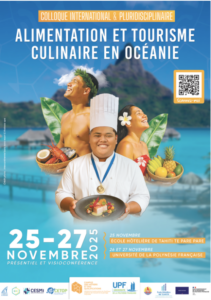
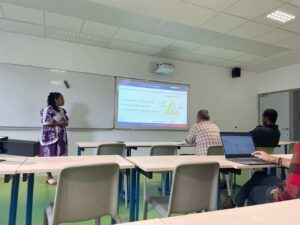
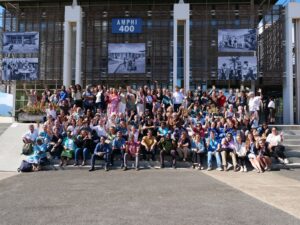
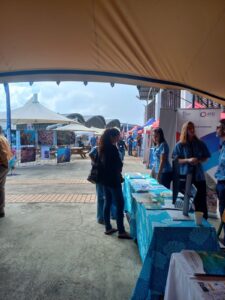
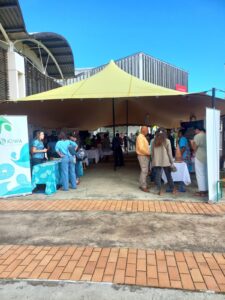
The CLIPSSA project (Pacific Climate, Local Knowledge and Adaptation Strategies), in collaboration with the hospitality and catering (industry) program of the Auguste Escoffier Vocational High school and the Consortium for Research and Innovation (CRESICA), co-organised an innovative cocktail party, “Clim à table”. Clim à table focuses on food, particularly the iconic tuber crops of the South Pacific such as yam, taro and sweet potato, at the crossroads of climate change and gastronomy. The highlight of this collaboration took place during the inauguration of the Science Festival on Thursday, 2nd October 2025, from 6pm to 8pm, at the school restaurant in Nouméa, New-Caledonia. CLIPSSA enriched the progression of the students in the hospitality and catering program at the Escoffier high school providing opportunities for meetings, exchanges and encounters.

Enriching encounters

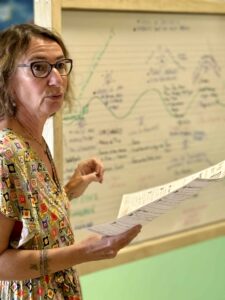
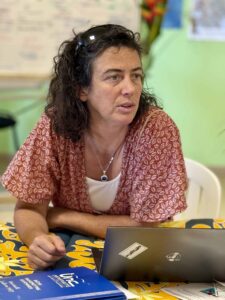
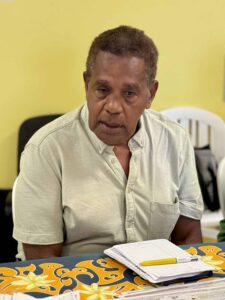
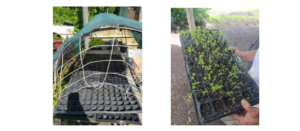
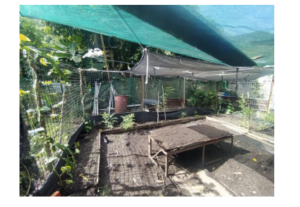
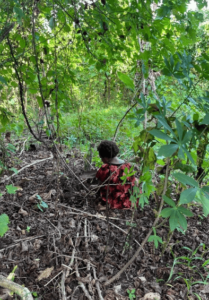
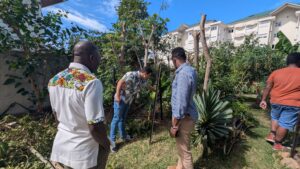
To further their knowledge and work, Escoffier students benefited from a visit by CLIPSSA project researchers to their agroforestry garden on the school grounds. It was an enriching encounter where they were able to talk to the scientists and ask questions about their missions and roles within CLIPSSA. It was an opportunity to gain from their expertise and learn a little more about climate change and its effects. It is a way not only to make scientific research concrete and tangible, but also to highlight that some concepts are already familiar to them to to the extent that they experience them on a daily basis (adaptation, resilience, agricultural work, fishing).

Photos crédits : Caroline Agier, Météo France

A touch of intelligence and a dash of creativity

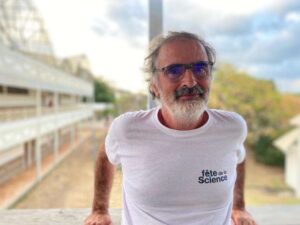
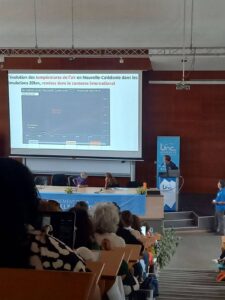
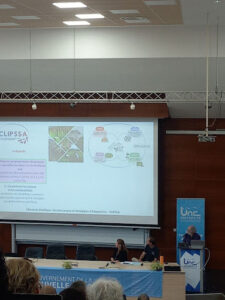
This 2025 edition of  of the Science Festival was intelligence, in all its various forms. The ambassador for this edition, Colin de la Higuera, researcher and professor at the University of Nantes, UNESCO Chair in Artificial Intelligence and Education, gave a speech on the use of artificial intelligence in research and learning.

Photos crédits : Julien Mazzoni, Les Nouvelles Calédoniennes

The culinary arts

This intelligence was expressed through the creative work of students training for their CAP Hôtellerie (hospitality certificate) and Terminale BTS (advanced vocational high school diploma) at Escoffier. Indeed, assisted by their teachers , they designed and served a cocktail featuring six savoury appetisers (three cold and three hot) and three sweet bites or desserts. The ingredients were meticulously chosen for their gustatory qualities and their potential to evoke themes related to climate change (e.g. bush fires and extreme heat = smoked yam croquette with venison sausage).

Public speaking

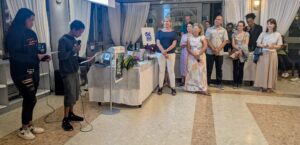
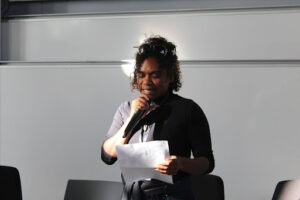
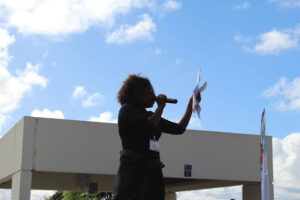
Creativity was certainly on display (The day was marked by creativity), particularly with slam poetry, as students participating in the Clim’ en vers project were able to express their thoughts on the same theme. This artistic discipline can be defined in two ways: writing the text, which allows for freedom and intimacy with words, and reciting it orally. Focusing on mini-scenarios, they volunteered to give rhythm and a voice to the urgency of the climate phenomenon. The floor was given to second- and first-year students in the hospitality and catering sciences section.  The involvement of young people in research-action requires recognition of their creativity and the use of the appropriate channel of expression. The CLIPSSA team’s role was to provide the keys, the specific vocabulary and to ensure consistency with the addressed theme.

Photos crédits : Caroline Agier, Météo France


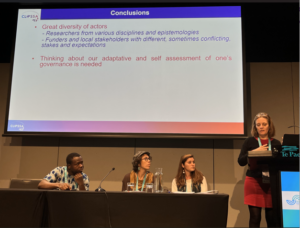
Therefore, art, while serving as form of escape, is revealed to be an excellent medium or vector for science communication and popularisation. Through the Clim’ à table project, kitchens, restaurants and classrooms become genuine laboratories providing models for future experimentation and scientific mediation/outreach initiatives. This approach helps to foster awareness of real social issues, thus contributing to development and research. The resulting feedback and lessons learned will be used to inform public policies concerning climate change awareness.


Understanding scientific research in 3 minutes


Understanding and exploring scientific issues in a clear, concise, readable and alternative way makes scientific research accessible to all types of audiences.


The following information sheets have been created to meet this need with the support and scientific data provided by CLIPSSA researchers:


Fact sheet 1: “What is CLIPSSA?’”

Fact sheet 2: ” Building CLIPSSA”

Fact sheet 3: Better measuring for effective action”

Fact sheet 4: Changes in farming practices in New Caledonia”

Fact sheet 5:Coping with water scarcity”

Fact sheet 6: Coping with water shortages”


Other fact sheets will be available soon.


Based on the research and work of scientists involved in the CLIPSSA project, these fact sheets address various issues related to the effects of climate change, such as water management, adaptation of agricultural methods and climate modelling.


They explain complex scientific work in a simplified manner, while helping to inform decisions and encourage action by stimulating reflection on the challenges of the future.


These fact sheets were produced in collaboration with the communications agency ‘Bien fait pour ta Com’, the IRD’s graphics department in Marseille, the CLIPSSA communications team, to combine scientific rigour, clarity of expression and visual quality.


CLIPSSA at the Caledonian Climate Change Forum!

Credit: Government  of New Caledonia


CLIPSSA at the second edition of the Caledonian Climate Change Forum


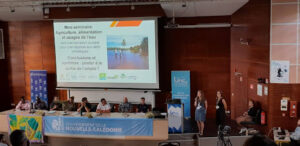
At the second edition of the Caledonian Climate Change Forum on Tuesday, 22 July at the University of New Caledonia (UNC), IRD, Météo-France, and the French Development Agency (AFD) were present to welcome various institutional, economic and academic stakeholders.

CLIPSSA was present at the exhibition village (Météo-France and AFD), which allowed the public to discover the advances and results. Information sheets were displayed at the exhibitions.


Credit: Eléa Yung-Hing, IRD

During the morning plenary session, the scientific coordinators (Christophe Menkès from IRD and Alexandre Peltier from Météo-France) shared an overview of the current state of climate science research.


Credit: Eléa Yung-Hing, IRD


Then, in the afternoon, the CLIPSSA team organised and participated in a mini-seminar entitled ‘Agriculture, food and water use: towards a sustainable transition to respond to climate challenges’, where Fleur VALLET (geographer and project manager) and Maya LECLERCQ (socio-anthropologist, postdoctoral researcher) led and moderated discussions with the following speakers: Thomas ABINUN (Météo-France Interregional Directorate in New Caledonia and Wallis and Futuna), Sebastien BLANC (Technopole), Franck SOURY-LAVERGNE (CAP-NC), Stephane BALAYRE (DAVAR), Julie DEFFIEUX (REPAIR), Yannick FULCHIRON (Agence Rurale), Samson JEAN-MARIE (IRD), Gildas GUIDIGAN (IRD).


The presentation was divided into four main themes :


  • The first focused on the effects and impacts of climate change on agriculture and water resources. Météo-France, Technopole and CAP presented the main changes in rainfall patterns in New Caledonia, as well as their concrete consequences on agricultural yields.
  • The second addressed the issue of competing interests, how to reconcile the needs of agriculture, food, and other water uses in the context of competition and collective water management. DAVAR discussed the overall importance of water resources, with significant spatial and temporal variability, drinking water supply services, needs/resource assessments and local water governance.

Next, an update was provided on adaptations, analysing existing solutions and practices or those to be implemented. CAP NC and REPAIR discussed land use planning and agricultural policies, support for farmers, and changes in practices, using CLIMATERRA and REALISM as examples.


Focus on CLIPSSA :


  • The CLIPSSA team took an anthropological approach to the subject.


During his presentation, Samson Jean-Marie outlined the adaptation strategies implemented by local communities during prolonged droughts, using the example of a farmer who abandoned his plantations, which his descendants were able to rehabilitate thanks to innovative solutions. He explained these different solutions, including deferred and localised weeding, mulching on crop rows or localised mulching, the coupling of irrigation systems, and the relocation and establishment of plots, with strategies to limit the impact of cyclones and erosion.

Gildas Guidigan went on to explain that plants respond to specific climate changes such as high temperatures, droughts, irregular rainfall, more frequent extreme events and increased risks to agricultural productivity through physiological, agronomic and sometimes adaptive mechanisms. Indeed, climate stress causes a decrease in photosynthesis in high heat, stomatal closure and loss of growth, reduced fertility (floral sterility, non-viable pollen), and an acceleration of the cycle (less time to produce grain). For example, tubers and cereals in the Pacific, particularly in New Caledonia, have their water requirements and increased vulnerability to heat.

To explain his research, Gildas presented the simulation tool APSIM next gen, which aims to reproduce crop growth (maize, rice, etc.), test different future climate scenarios (RCP 4.5, 8.5, etc.), evaluate alternative agricultural practices (sowing, irrigation, varieties), and assess the response of crops (rice and corn) to climate variables. Results have been observed, particularly with maize, where increasing water stress during flowering and a possible decrease in yield have been noted if the sowing date is inappropriate. For yams, high temperatures cause floral sterility, making irrigation essential in future conditions. The adaptation scenarios identified are therefore to bring forward sowing dates and choose more resistant varieties, as well as optimise water management. Plants experience climatic stress, and their responses can lead to productivity losses, demonstrating the importance of simulation models such as APSIM.


  • Then, in a fourth area, the rural agency, Repair and Technopole, developed a future of possibilities based on food and agricultural models for tomorrow and collective choices to be avoided to guarantee sustainable agriculture and food in the face of future climate change. The topics discussed included the transformation and autonomy of agri-food systems, food behaviour in New Caledonia, more autonomous and economical production systems, ecosystem services and agroecology, and acclimatised local varieties.


Find the summary sheet for the round table discussion here.


Credit: Catherine Sabinot, IRD


A youth brimming with ideas and motivation


As the government wanted to involve young people in its action plan for adapting to climate change, they were given prominence at this forum, particularly through the choice of venue for the event. Science classes were cancelled so that students could attend the round tables. Educational activities were organised at specific stands to communicate and popularise scientific research among students. Finally, the media present interviewed the young people in attendance.


  • A youth advocacy event was organised to give young people a voice.
  • Two slam sessions were held by Georgina Sioremu, a communications and mediation apprentice with the CLIPSSA team: the dark humour of climate change and my youth has its place.


Credit: Government of New Caledonia


This youth session echoes the study carried out in 2024 by Ilona DA CRUZ GERNGROSS, a Master’s 1 Sustainability Sciences intern in 2024 within the CLIPSSA project, ‘The integration of young people in the consultation and development processes of the climate change adaptation strategy in New Caledonia’. 


The CLIPSSA project highlights local adaptation strategies to climate change in the Pacific at the 92nd ACFAS conference

At the 92nd ACFAS conference, held May 5–9, 2025, in Canada on the theme of “cross-disciplinary research perspectives on responsible management practices,” the CLIPSSA project (Climate of the South Pacific, Local Knowledge, and Adaptation Strategies) gave a voice to Pacific island agriculture. In a presentation entitled “From perception to adaptation strategies: local climate change management practices in New Caledonia and Vanuatu,” Samson Jean Marie, a doctoral student in anthropology and geography working on this project, presented the initial results of these field surveys. He explained how farmers in these territories, who are on the front line of climate change, are adapting their practices to cope with it.


Territories on the front line

Oceanian societies, which are heavily dependent on natural and agricultural resources, are on the front line when it comes to intensifying weather, climate, and environmental disturbances: prolonged droughts, destructive cyclones, soil salinisation, and shifts in agricultural seasons. Vanuatu, regularly ranked among the countries most exposed to global climate risks, is a striking example of this. In New Caledonia, repeated episodes of La Niña and El Niño are causing water imbalances and undermining food security in rural areas.

Based on around 100 interviews conducted with farmers, institutions, politicians, and local organisations, Samson, in collaboration with the project’s research team, analyses how agricultural knowledge is built and transmitted in the face of climate change.

This resolutely interdisciplinary approach combines anthropology, agronomy, geography, sociology, and climatology to grasp the complexity of local dynamics. In his presentation, the doctoral student outlined a range of local adaptive responses, such as crop management practices, water management strategies, local cyclone warning systems, and post-disaster responses identified in the areas studied. “Adaptation is not simply a matter of applying international recommendations. It is experienced, improvised, and discussed at the level of gardens, fields, and families,” explained the young researcher.


Dynamic local knowledge

Contrary to popular belief, local knowledge is not static. It is transmitted, adjusted, and reinvented in response to climate change. Traditional mulching, hole cultivation, water storage in handmade tanks, adaptation of varieties, and community oral alerts before cyclones: farmers’ innovations take many forms, often invisible to decision-makers, but central to local resilience. “In several villages in Vanuatu and among tribes in New Caledonia, experienced farmers serve as information relays before cyclones arrive. They read the signs of the wind, the birds, and the sea.  These biocultural markers, combined with weather information, enable farmers to anticipate the event [cyclone] ” better, as observed more broadly by the research team.


From words to action: when local practices lead the way

By documenting this knowledge, the CLIPSSA project highlights that rural communities in the Pacific are not simply “vulnerable” to the effects of climate change: they are already taking action, often in pragmatic and innovative ways, far from the media spotlight or international climate policies. In other words, these initiatives already embody a responsible approach to climate and environmental change management at the local level. They provide a concrete foundation on which public policies and institutions can build.

The ACFAS conference thus provided a forum to highlight the urgent need to change approaches to local agricultural adaptation practices in climate policies. In response to the conference title, “Cross-disciplinary research perspectives on responsible management practices,” and the conference debate, “Moving from words to action,” the doctoral student replied: “It is time to move from words to action. And that starts with recognising that adaptation cannot be decreed, but must be built with those most directly affected: the inhabitants themselves. Local practices, particularly those related to adaptive responses to the impacts of climate change, are a form of local expertise in action. Ignoring them means depriving ourselves of essential levers for sustainable adaptation.”

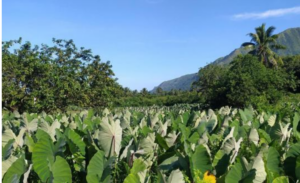
Taro plantation in the ‘voura’ of Ipayato (Santo, Vanuatu) @ Samson JEAN MARIE

CLIPSSA Research Teams in the Field

As part of the “Pacific Climate, Local Knowledge and Adaptation Strategies” project (CLIPSSA), researchers in human and social sciences (HSS) have been deployed in the four countries and territories involved: New Caledonia, Wallis and Futuna, French Polynesia and Vanuatu. Their objective: to document and report on local agricultural knowledge and its evolving strategies for adapting to the challenges of climate change.


Key Figures

To date, the HSS teams have conducted several hundred interviews across the various study sites:

  • New Caledonia (La Foa, Canala and Maré): 89 farmers, 11 institutional and political stakeholders

  • Vanuatu (Espiritu Santo and Efate): 43 farmers, 12 institutional and political stakeholders

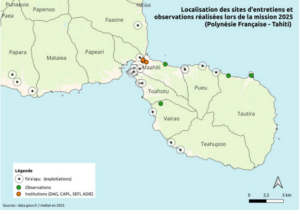
  • French Polynesia (Tahiti and Moorea): 57 farmers, 3 food processors, 36 institutional actors, 10 researchers

  • Wallis and Futuna (Futuna and Alo): 25 farmers, 10 institutional stakeholders


Three Months of Fieldwork in French Polynesia – First Half of 2025

From April to July 2025, postdoctoral modeller Dakéga RAGATOA (in charge of French Polynesia and Wallis and Futuna) and project engineer Fleur VALLET accompanied the HSS field team, composed of postdoctoral anthropologist Maya LECLERCQ and interns Chloé DELBOVE and Moeana PENLAE.

Institutional meetings and interim feedback

On the islands of Tahiti and Moorea, the researchers engaged in discussions with the Chamber of Agriculture and Lagoon Fishing (CAPL), the Department of Agriculture (DAG), the CRIOBE research center, the AgroDev and Pae Tai Pae Uta (PTPU) consultancies, the Opunohu agricultural high school, and the “Taro ITE” project team, supported by the KIWA Initiative.


Public seminar at the University of French Polynesia

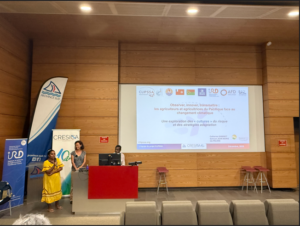
On April 22, a seminar at the Pacific Human Sciences Center (MSHP) enabled Maya and Dakéga to present the project’s methodology and early findings. This public restitution reflected the project’s commitment to science communication and local stakeholder engagement. The event brought together AFD Polynesia, NGO representatives, students, and researchers. A second presentation was held at Saint Joseph High School in Punaauia, where Dakéga introduced the APSIMX agroclimatic model, used to simulate future climate effects on Pacific crops, particularly tubers (yam, taro, cassava…).

Read more: From Local Knowledge to Simulation: An Integrated Approach to Anticipating Climate Impacts on Pacific Root Crops & seminar recording


Engaging with Local Stakeholders

Maya, the anthropologist in charge of coordinating fieldwork in French Polynesia, led the research alongside Catherine SABINOT, IRD anthropologist and CLIPSSA scientific coordinator. Field interviews with farmers were conducted by Chloé and Moeana, both completing their master’s internships within the CLIPSSA project—Chloé through the National Museum of Natural History in Paris, and Moeana through the University of French Polynesia. They spent several weeks with farming communities: Moeana in Moorea and Chloé on Tahiti’s peninsula, gaining insights into agricultural practices and climate adaptation strategies. Their findings complemented the results produced in 2024 by Maya and Marie-Amélie RICHEZ.

The mission concluded with several feedback workshops for the people involved in the study: future farmers enrolled in the BTSA program at Moorea Agricultural High School, farmers from Moorea, and those from the Tahiti Peninsula.

Read more: CLIPSSA Scientific Findings Presented at the Opunohu Agricultural High School, Moorea


Three Months of Fieldwork in Vanuatu – First Half of 2025

Meanwhile, Samson JEAN MARIE, PhD candidate in anthropology and geography, and Ida PALENE, intern from ISTOM, completed a total of six months of immersive fieldwork in Efate and Espiritu Santo. Catherine SABINOT joined them for two weeks. In April, postdoctoral modeller Gildas GUIDIGAN also joined the team for three weeks to familiarise himself with the field and meet institutional stakeholders managing agricultural data.

Institutional and Scientific Engagement

To ensure strong collaboration with local institutions, many meetings were organized.
In Efate, the team engaged with the Vanuatu Meteorology and Geohazards Department (VMGD), the Department of Agricultural and Rural Development (DARD), and representatives from the Van-KIRAP project (Vanuatu Klaemet Infomesen blong Redy, Adapt mo Protekt), aimed at strengthening the country’s resilience to climate change.
In Espiritu Santo, a working visit to the Vanuatu Agriculture Research and Training Center (VARTC) was coordinated by Marie Vianney MELTERAS, the center’s director of research and CLIPSSA focal point in Vanuatu.


An Ethnography of Agricultural Knowledge

Samson and Ida shared the daily lives of rural farming communities in Santo and Efate over several weeks. In households, fields, markets, forest paths and rivers, they engaged with elders, youth, women and men, as well as institutional and customary actors. They chose an immersive, participatory approach based on observation, dialogue, and careful listening. Occasionally joined by Catherine during their stay, they used a variety of methods: semi-structured interviews (individual and group), participant observation, discussion workshops, and georeferenced mapping of fields and knowledge-sharing locations.

Farming Systems in Constant Adaptation

Their research revealed a wide array of adaptive strategies implemented by farming families: diversification of plots, crop rotation, preservation of traditional irrigation systems, farming in more remote areas…
While Samson’s work is part of his PhD research on local knowledge and adaptive capacities, Ida focused on the often-overlooked role of women, who play a central part in fieldwork, seed preservation, and knowledge transmission.

Back from the field, the two young researchers brought back more than just data—they also returned with a new language that they now harem save (understand) and toktok (speak): Bislama. A living testimony to their immersion and the relationships forged with the communities they encountered.


CLIPSSA: Between Pitchfork, Furnace, and Climate Forecasts

Throughout their investigations, the researchers also immersed themselves in the processing and culinary uses of the food crops studied within CLIPSSA. From Vanuatu’s laplap to nalot, a traditional island meal, and through coconut milk preparation workshops in Taravao (French Polynesia), the teams engaged with the food cultures of their hosts.

These moments also echoed a broader issue at the heart of the CLIPSSA project: the food sovereignty of Pacific Island communities.


Want to Learn More? 

Stay tuned for upcoming articles featuring field reports from our human and social sciences interns. 

Adapting agricultural practices and water resource management in Moorea: Transmission and evolution of local knowledge in a changing climate – Final Internship by Moeana PENLAE

Final Internship by Moeana PENLAE
University of French Polynesia – Master’s Degree (Year 2) in Biodiversity, Ecology and Environment, specialisation in Pacific Island Environments (BEE – EIO)
February – July 2025
Supervisors: Maya LECLERCQ (IRD), Catherine SABINOT (IRD)

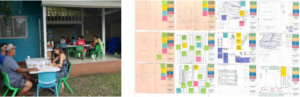
Participated in the facilitation of 3 feedback workshops in Tahiti and Moorea in June and July 2025, bringing together agricultural students and local farmers met during fieldwork. 


Figure 1: Photo of one of the feedback workshops held in Moorea with Agricultural BTS students and trainees in Agricultural Installation Training (FIA) at the Centre de Formation Professionnelle et de Promotion Agricole (CFPPA) of Opunohu (Source: Maya Leclercq, June 2025)  


Article summary 

Pacific island territories are particularly vulnerable to the effects of climate change, especially regarding small-scale agriculture, which is subject to challenges such as irregular rainfall, droughts, and fragile ecosystems. In this context, proper water management and the preservation of adapted agricultural knowledge are essential to ensuring food security. This study, conducted in Moorea as part of the CLIPSSA project, focuses on how farmers adapt to environmental challenges. Our team carried out interviews, field observations, and participatory workshops, highlighting a diversity of local strategies: the use of traditional environmental indicators, and innovative techniques such as drainage systems and composting. The study reveals two main types of agricultural knowledge: on one hand, ancestral knowledge transmitted orally or through observation—such as lunar cycles (tarena) or plant phenology; on the other, contemporary knowledge stemming from modern practices, shared via media, online videos, or training programs. Hybrid forms of knowledge transmission exist, where knowledge circulates through peer exchanges, social networks, or training programs that blend empirical practices with technical input. However, this knowledge is weakened by socio-economic constraints, such as the declining interest of youth in agriculture and difficulties in accessing land. This work thus highlights the vulnerabilities in the transmission of agricultural knowledge and underscores the importance of grounding adaptation policies in local realities. 


Study context 

High islands such as Moorea are particularly vulnerable to climate change: extreme rainfall, flooding, landslides, and prolonged droughts. These hazards threaten local food security and complicate water management, especially for sensitive crops like taro or vegetables. For this study, the research area covers a significant portion of Moorea, including an agricultural subdivision and the agricultural high school in the Opunohu valley, as well as valleys where subsistence farming is practiced. 

Figure 2: Study site 


In addition to climate-related challenges, farmers face several social constraints. Young people often turn away from agriculture, drawn to jobs perceived as more prestigious. Access to land remains difficult, with land often being shared or legally insecure. Finally, traditional knowledge is gradually disappearing as farmers age—the average age is 49 (RGA 2023)—threatening knowledge transmission and generational continuity. 

The study is based on 18 semi-structured interviews conducted from mid-April to the end of May on the island of Moorea, involving institutional stakeholders (Department of Agriculture (DAG), Chamber of Agriculture and Lagoon Fisheries (CAPL), etc.), farmers, and informal discussions with roadside fruit and vegetable vendors. 


Main results 

The results highlight a diversity of adaptation practices that reflect both a strong cultural foundation and a high capacity for innovation:

  • Water: A central issue
    During periods of heavy rainfall (December–January in French Polynesia), excess water currently represents one of the main climate challenges for farmers in the Opunohu Valley, especially for sensitive crops such as taro, banana, or papaya, which suffer from soil saturation. In some areas, drainage systems (drainage ditch) or rainwater collection systems have been implemented, sometimes in a homemade manner. However, workshops conducted with farmers showed that this constraint is not shared by all: on sloped land, natural runoff allows water to drain more easily, thereby reducing the risk of waterlogging. 

Figure 3: Photo of a drainage ditch dug on a farmer’s land in Opunohu (Moorea) to evacuate excess water (Source: Moeana Penlae, July 2025) 


  • Crop choices adapted to local context
    Producers adapt their choices based on topography, soil quality, and water access: banana trees in humid areas, citrus trees on higher ground, and pineapples on dry terrain. Some diversify their crops to reduce risk. 
  • Knowledge in constant hybridization
    Many farmers continue to use traditional indicators such astarenaor natural signs (plant phenology, appearance of insects indicating imminent rain, etc.). These indicators are combined with modern sources such as online tutorials, advice from the Department of Agriculture (DAG), or agricultural training (CFPPA). 
  • A strong connection to the land
    Thefa’a’apuis more than a field: it is a place of learning, memory, and identity. It embodies a sensitive relationship to thefenua, a Tahitian term generally referring to a country, land, or territory. It is often associated with everything related to the soil, the environment, or cultural belonging. 
  • Weakened knowledge transmission
    Agricultural knowledge has traditionally been passed down through observation and hands-on practice between generations. Today, this transmission is fading, as young people are showing less interest in the agricultural sector, with the farming profession being undervalued. 


Spending less to adapt 

In a context of limited resources, farmers are developing low-cost and autonomous solutions, often outside institutional frameworks: 

  • Natural compost made from food scraps, banana leaves, plant waste, or fish waste 
  • Buried containers and repurposed tarps to store rainwater 
  • Raised beds or elevated growing areas to prevent water stagnation 
  • Crop associations to optimize soil moisture (e.g., planting banana trees around other crops) 

It has been observed that, to cope with climate change, many farmers implement simple and inexpensive solutions, often created by themselves. In 1962, Claude Lévi-Strauss described the “bricoleur” as someone who creatively assembles available materials to solve problems—illustrating the inventiveness of these practices through flexible and resourceful thinking. These practices also reflect a certain degree of isolation: due to a lack of targeted support, adaptation often relies on individual efforts. 


Conclusion 

Agriculture in Moorea is currently shaped by multiple challenges: climatic, social, and institutional. Yet, farmers demonstrate active resilience by inventing new ways of farming, learning, and transmitting knowledge. This resilience is based on: 

  • A deep understanding of the environment 
  • An ability to experiment, adapt, and improvise 
  • A strong cultural attachment to thefenua 
  • A determination to preserve a way of life connected to the land 

To strengthen this dynamic, it is urgent to: 

  • Recognize farmers as co-actors in climate adaptation 
  • Support modest solutions and local innovations 
  • Create spaces for intergenerational exchange 
  • Include local knowledge in public climate policies 

Although rooted in Moorea, this research offers valuable lessons for other island territories. It shows that local agricultural knowledge is not a thing of the past, but a valuable resource for building a more resilient, self-reliant, and climate-adapted future. 

“Clim’en Vers”

Supported by IRD, Météo-France and AFD, the CLIPSSA project (Pacific Climate, Local Knowledge and Adaptation Strategies) aims to give a voice to the younger generation on climate change, blending science with the art of writing. The Clim’en Vers initiative stems from this ambition. It was conceived by Caroline AGIER, communications and digital affairs officer at the interregional office of Météo-France in New Caledonia and Wallis and Futuna. The goal is to guide students in creating texts related to climate change and adaptation, and to showcase their work at relevant events in the form of display panels.


Passing on knowledge about climate change

To launch the project, Thomas ABINUN, meteorology and climate studies engineer at the Météo-France interregional office in New Caledonia and Wallis and Futuna, and Myriam VENDÉ-LECLERC, climate adaptation strategy officer for the Government of New Caledonia, introduced students to the key concepts of global climate change and the different ways to adapt to it. On Tuesday, May 6, 2025, two classes from Lycée Escoffier in Nouméa attended this presentation, coordinated by their science teacher, Ms. BERTRAND.

Introductory session on climate change at Lycée Escoffier, 05/06/2025, ©Cléophée MONTIZON

Choosing key words, writing and performance

In the second stage—writing—the 10th-grade class in Hospitality and Catering Sciences and Technologies (STHR) dedicated two hours of their French class on Thursday, May 22, to the activity led by Mr. MAFFAY. This writing workshop was facilitated by Georgina SIOREMU, artist and communications and science mediation assistant within the CLIPSSA team. It allowed students to create heartfelt, committed texts while sharpening their sense of rhythm through a final recitation. Their original work emerged from four different writing prompts: 

  • Write a letter to someone close to you who lives on the other side of the world and doesn’t yet fully understand the impact of climate change. Warn them.
  • You live by a river. Due to heavy rains, your house was flooded and you had to move up into the mountains. Describe how you feel.
  • Do you know the story of the hummingbird metaphor? If it could speak, what would it say to humankind?
  • You run into a former internship supervisor years later. He runs a restaurant and tells you how hard it has become to source key ingredients—especially yam, sweet potato and taro—because of droughts and floods. You go home and write your thoughts in a journal.

Writing session at Lycée Escoffier,  May-July 2025, ©Caroline AGIER


In the following workshops, held on Wednesday, July 2 and Wednesday, July 9, students added stylistic devices and refined their sentences to make them more impactful. Each group then practiced performing their text aloud.

On Thursday, July 3, 11th-grade students were surprised by the arrival of a new guest: Simane, a slam artist with both local and international recognition, joined by influencer and TV presenter Astro, and Passil, organizer of the Urban Films Festival. They introduced them to the fundamentals of slam poetry—its definition, values, and purpose. Using a list of verbs and a word cloud on the theme of “the environment”, he created a slam in just a few minutes. Simane then offered a wealth of advice on how to deliver and pace their texts. The students watched several slam performances by the guests.

Writing session at Lycée Escoffier, 07/03/2025, ©Caroline AGIER


The second hour was devoted to a writing workshop led by Georgina, designed to link the students’ future profession in hospitality to the CLIPSSA project. A series of prompts helped guide their writing:

  • Tomorrow’s menu – cooking in times of crisis: Imagine a restaurant in 2050 facing food shortages due to climate change. How do they adapt? What new recipes? What creativity?
  • The submerged school – tale of a sunken place: Tell the story of a hospitality school located on a coastline threatened by rising sea levels. What happens to its staff, its clients, its legacy?
  • The last chance banquet: You are organizing a symbolic meal to raise awareness about climate change. What’s on the menu? Who do you invite? What is the atmosphere like?
  • Journal of an eco-responsible apprentice: You follow an apprentice learning to cook and serve while reducing environmental impact—sorting waste, sourcing locally, saving energy, following ethical practices…
  • A world without seasons: Imagine a world where seasons no longer exist. How does this affect restaurant operations and menu planning?


The young slammers thus went through all the key phases of text creation: developing ideas, searching for vocabulary, writing with rhyme, and incorporating stylistic devices. On Friday, July 4, the 11th-grade students finalized their texts, produced clean copies, and performed their final versions aloud.

The creative works of both 11th- and 12th-grade students were exhibited during the Caledonian Forum on Climate Change held on July 22, organized by the Government of New Caledonia in partnership with the University of New Caledonia (UNC).

Exhibition at the Caledonian Forum on Climate Change, 07/22/2025, ©Caroline AGIER

They will be showcased again on August 8 during the Science and ESD Festival organized by the Vice-Rectorate, and in October during the Science Festival coordinated by CRESICA.

Clim’en Vers exhibition panels, 07/2025, ©Caroline AGIER

New Caledonian pupils get involved in the CLIPSSA project

Over the past few weeks, a class of twenty CM2 pupils from Marie Havet elementary school in Nouméa, accompanied by their teacher Audrey Mazeron, have become co-researchers at the crossroads of three research projects: CLIPSSA, SOCPacific2R, and MaHeWa on marine heat waves (WP3).


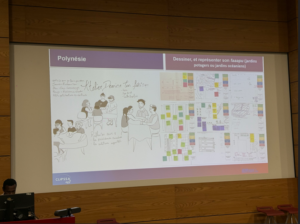
In dialogue with researchers involved in CLIPSSA and/or MaHeWa project (Catherine Sabinot, Elodie Fache, Annette Breckwoldt), students from the University of New Caledonia (Amandine Aiglehoux, Elijah Tenene, Reine Wadieno), Vanessa Montagnat from New Caledonia’s Department of Pedagogical Education, Florian Barthe from the Symbiose association, and their teacher Audrey Mazeron, these young co-researchers defined two drawing instructions. They then proposed these instructions to the other 5th graders in their school, whom they also interviewed after the drawings had been completed. Analysis of these drawings led the young co-researchers to adjust their two drawing instructions, which will then be used for drawing workshops in elementary school in La Foa and Thio:

  • Draw what might happen to fish and coral, vegetables and fruit, as a result of climate change.
  • Draw what fishermen and farmers can do to have fewer problems, even if the planet warms up.


The schoolchildren from La Foa and Thio, after following the given instructions, tested and adjusted a drawing instruction focusing on reef passes in turn. A few days later, the young co-researchers from Nouméa responded enthusiastically, each producing a corresponding drawing.

VSC – Scientific Research Support Officer F/H

Category:
Category A (Executive)

Position open to :

Contract workers

Fiel/Profession

SCIENCE – BAP D: Human and Social Sciences – D2A41 – Research engineer in data production, processing, analysis and surveys

Job status:

Vacant

CORPS:

VSC

BAP:

Not concerned

Job title

VSC – Scientific Research Support Officer F/H

Description of the employer


The IRD is a multidisciplinary French public research organisation which, for nearly 80 years, has been committed to equitable partnerships with developing countries and French Overseas Territories.

As a player on the international development agenda, its priorities are in line with the implementation of the Sustainable Development Goals (SDGs).

Together, scientists and the Institute’s partners propose concrete solutions to the global challenges facing society and the planet. This win-win relationship makes science and innovation major levers for development.

The Institute comes under the dual authority of the Ministry of Higher Education and Research and the Ministry of Foreign Affairs.

L’IRD in 230 secondes

Description of the structure


The UMR ESPACE-DEV aims to characterise and prepare transitions to ensure the sustainability of the integrated society-environment system. It is organised into 3 areas of expertise: ‘Science of socio-ecosystems and their territories’, ‘Data and model sciences’ and ‘Earth observation science’. Anchored in the sciences of sustainability. Several interdisciplinary research projects are led or co-lead by UMR Espace-Dev researchers. Two key projects, co-sponsored by Catherine Sabinot and colleagues from the oceanic and climate sciences based in Noumea, aim to produce inter- and trans-disciplinary research that will be useful to citizens and politicians in the overseas territories of the Pacific (French territories, Vanuatu, Fiji).

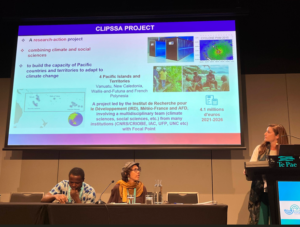
The CLIPSSA project combines the climate sciences with the human and social sciences to help the territories draw up adaptation plans to deal with the threats posed by climate change, with a particular focus on the impact on agriculture.

The MaHeWa project, which also looks at climate projections for the region, focuses on analysing the vulnerability of socio-ecosystems to marine heatwaves.

An attractive assignment


Reporting to Catherine Sabinot, an IRD researcher, your role will be to support the researchers involved in this scientific work to meet sustainable development objectives in Overseas France and the Pacific region. You will play an active role in the Climate (Climate Change), LEO (Coastal and Ocean) and SyAD (Sustainable Food Systems) knowledge communities.

Your activities will include

Taking part in the various stages of the projects, involving researchers, local authority field workers, farmers and fishermen and decision-makers, in order to gain a better understanding of contemporary societies and their issues in overseas France in particular.
Helping a researcher in the team to carry out field surveys at one or more study sites.
Contribute to the processing and analysis of the data collected.
Contribute to the drafting of field reports.
Contribute to the promotion of scientific results (scientific conferences and publications; outreach to the general public and dialogue between science and society).

Your future team


You will have the opportunity to meet a wide variety of researchers and professions, and to experience interdisciplinary dialogue and interaction with institutions and communities in need of research results.


The profile we’re looking for


You will have developed the following skills:

  • Mastery of survey techniques in the human and social sciences (questionnaires, semi-structured interviews, participant observation).
  • Analytical, writing and summarising skills.
  • A driving licence is essential for travelling in the field.
  • Written and spoken English at B1-B2 level.

You have the following human qualities:

  • Dynamic and rigorous.
  • Adaptability.
  • Ability to work as part of a team and independently.
  • A taste for working in a multi-disciplinary and socio-culturally diverse team

Knowledge of the context of islands and Oceania and/or expertise in the study of agrosystems and/or fisheries would be a plus.


You have a level 7 diploma, master’s degree or engineering degree in the following fields: Anthropology, Geography or involving interdisciplinary approaches.

Your benefits on a VSC assignment:

  • Gross monthly allowance: €2098.52 (for volunteers whose main place of residence is not New Caledonia).
  • Allowances exempt from income tax.
  • Travel and luggage transport covered (return journey).
  • ISOS/HDI insurance.


Job location

Job location:

Europe, France, TOM, Nouvelle Calédonie (988)

City of assignment:

Nouméa

Teleworking possible:

No

Management:

No

Job vacancy date:

01/12/2025

To apply, please consult this link


CLIPSSA reaches out to the public

The C’nature conference: what future climate for New Caledonia? 


Christophe Menkès and Alexandre Peltier, respectively a climatologist and co-coordinator of CLIPSSA, and a meteorologist in charge of climate at Meteo-France‘s inter-regional office in New Caledonia and Wallis and Futuna, presented their work to the public at the C’nature conference on April 1, 2025. The conference, organized by CRESICA at the Province Sud auditorium, was attended by 110 participants.

Christophe Menkès at the C’nature conference, 04/01/2025, © Cléophée Montizon


New Caledonia’s past climate 

Alexandre Peltier presented the methods used to measure recent climatic changes in New Caledonia. Every day, meteorologists check the readings from temperature and precipitation stations. Access to historical data is necessary to monitor long-term climate trends. Analysis of this data shows an average rise in New Caledonia’s climate of 1.3°C since 1965 and an increase in the frequency of heatwave episodes.

On the other hand, precipitation fluctuates due to the oscillation between El Niño and La Niña, which is crucial for this part of the Pacific. During the austral winter, precipitation decreased by 11 millimetres per decade between 1955 and 2024.

As far as cyclonic activity is concerned, it is impossible to establish any significant trend for the territory of New Caledonia, due to the absence of homogeneous historical data. Although such data could be used to observe the evolution of these phenomena, the many technical advances that improved their monitoring during the second half of the 20th century mean that the information available is too heterogeneous.


Future climate in Nouvelle-Calédonie

Christophe Menkès then presented the climate changes expected in the future.

The 2022 IPCC report shows a global temperature increase of 1.4°C from 1850 to 1900. Numerous climate models are available to simulate these climate trends. Based on past and present data, these models project future global temperatures from 2015 to 2100. They provide climatologists with an interval of uncertainty and a range of future possibilities. Different evolution scenarios are determined according to the amount of greenhouse gas emissions expected.

After a detailed explanation of how the IPCC’s climate simulations work, the CLIPSSA project co-coordinator pointed out their lack of precision for island areas such as New Caledonia. CLIPSSA simulates the impacts of climate change, which are far from uniform across the globe, on this small territory, as well as on Vanuatu, Wallis and Futuna and French Polynesia.

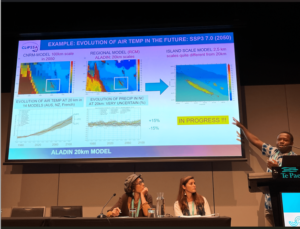
To achieve this, climate models will be regionalized, i.e. adapted to the scale of these territories. The finest scale will be 2.5 kilometres, enabling us to examine the future of precipitation, temperatures and cyclones. For a climate simulation to be reliable, the researchers must include it in 14 simulations. This ensemble predicts a temperature rise in New Caledonia between +2.2°C and +3.5°C, with an average of +3°C, in 2100, compared with the 1981-2010 period.

Watch the whole conference below.


Pacific in transition: perspectives on climate


When the human and social sciences and climate sciences come together to consider the future of agricultural production in the South Pacific

Against a backdrop of climate upheaval, agricultural practices in the Pacific are facing profound changes. Increased climate variability and extreme events, such as heavy rainfall and severe drought, are testing local agrifood systems. These changes raise essential questions about adaptation, resilience and the transmission of agricultural knowledge. To publicize these issues and make their scientific implications accessible, the CLIPSSA project brought together over 120 people in the South Pacific Community (SPC) auditorium in Nouméa for an evening of scientific mediation. Different viewpoints and testimonies were exchanged on the impacts of climate change on the territories of the South Pacific.

Pacific in transition evening, SPC auditorium, 03/26/2025, © Jean Michel Boré


Young voices committed to the climate

The evening started with a moving presentation on how young people in New Caledonia feel about climate change. Through drawings, CM2 pupils from the Marie Havet school in Ouémo, the Yvonne Lacourt school in La Foa and the Thio school group shared their vision of climate change. A video presenting the project was shown. This sequence highlighted an intergenerational perception that oscillates between hope and concern.

“It’s essential that we are involved in the decisions that affect our future. (…) We want to play an active part in devising solutions.” Dylan Leconte

Following this opening, two young people committed to defending their environmental heritage spoke eloquently. Their oratorical performances reflected a deep attachment to their territory. Georgina Sioremu, a Bachelor’s student in graphic and web design at the École du Design de Nouméa, and Dylan Leconte, a student in a preparatory class in economics and business at the Lycée Dick Ukeiwe, affirmed their desire to get involved in the dynamics of social and climatic transformation, and to be part of a movement of transmission and sharing.

“I can’t look away any longer, my mission is waiting for me. (…) We can all see the changes.” Georgina Sioremu


Georgina and Dylan in front of the event poster, SPC hall, 03/26/2025, © Maeva Tesan 

Relive their performance on video and read their text in the appendix to this article. 


Crossing disciplines to understand climate reality better

A panel of social science and climatology researchers then took the floor to share their work with CLIPSSA.

Through a rich dialogue, Dakéga Ragatoa, postdoctoral modeller of the impacts of climate change on agriculture and water at IRD, and Jérémy Guerbette, research engineer at Météo-France’s Direction interrégionale de Polynésie Française, highlighted their respective roles in CLIPSSA and their first results.

Climate simulations show possible future trends in several variables, such as temperature, wind, and precipitation. Modellers can then simulate the response of plants and crops to these changes.

Panelists at the evening event, SPC’s auditorium, 03/26/2025, © Jean Michel Boré 


Regarding the human and social sciences, Maya Leclercq, a post-doctoral anthropologist at IRD, and Samson Jean Marie, a doctoral student in anthropology and geography at EDP-UNC (Ecole doctorale du Pacifique de l’Université de Nouvelle-Calédonie) and IRD, presented the adaptation strategies developed by local communities in the four territories.

For example, some yam and taro growers in Futuna vary the distances between plantations each year to observe changes in yield. Similarly, on the southern island of Espiritu Santo in Vanuatu, farmers plant soft yam (a variety of yam) and sweet potato in the same field to protect themselves against cyclone damage. Anthropologists have discussed the limits of these strategies and the cultural and social resources mobilized to cope with the new climatic constraints.

The CLIPSSA project aims to pass on these scientific analyses to institutions, guiding public policy towards adaptation plans informed by realities on the ground.


In addition to interacting directly with the panellists in a question-and-answer session, the public shared their experiences of farming practices. Participants in the various surveys shared their experiences of weather-related hazards. At the end of the conference, the audience said they felt “inspired” and “hopeful”.

Screenshots and photographs of the evening polls, SPC’s auditorium, 03/26/2025, © Cléophée Montizon


The evening ended with a screening of extracts from the documentary Un paradis en péril, directed in 2022 by Jacques-Olivier TROMPAS (JADA Productions) in co-production with IRD. The CLIPSSA project team participated in the film by conducting interviews on the study of climate change impacts and the transmission of scientific results to public policies and communities.


Towards a shared future

Combining scientific insights and citizen testimonials, Pacifique en transition provided a better understanding of the region’s climate challenges. In addition to raising awareness, the event opened up prospects for dialogue and cooperation between researchers, citizens and institutions to build sustainable, resilient responses rooted in local realities.

Speakers and organizers in front of the event poster, SPC hall, 03/26/2025, © Maeva Tesan


You can relive the evening in its entirety in the video below.


Appendices :


What future climate for New Caledonia?

Pacific in transition: perspectives on climate